The sony aibo robotic dog is a small companion robot designed to respond to people and its surroundings. It has moving ears, expressive eyes, and a flexible body that can walk, sit, and play. Cameras and sensors help it recognize faces, track movement, and react to touch. Its behavior can change over time through interaction and software updates. That can make daily encounters feel personal. It can also make the experience less predictable than a traditional toy.
Sony CEO Kazuo Hirai described Aibo as “a robot that can form an emotional bond with its owner.” That idea helps explain the product’s appeal, but it is worth examining carefully. Aibo can imitate some social cues; it does not feel affection as a person or animal does. Its camera may pause near a familiar face. Its tail may wag when someone speaks. Those details can feel charming, even a little uncanny. There is a practical side, too: owners should consider charging, connectivity, ongoing service, and repair options before buying. Aibo is not a low-maintenance pet substitute. It is a carefully engineered device, with real limits. This guide explores how it works, what it can do, and where expectations may need adjustment. We will look at its design, interaction features, costs, and everyday use, so readers can judge whether this robotic companion suits their home.
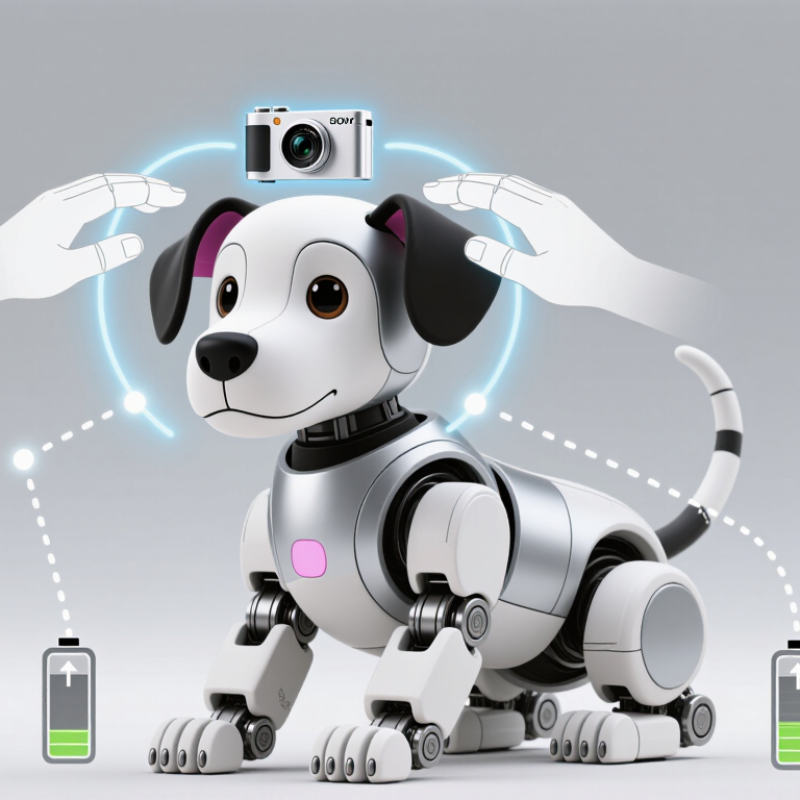
Definition and Purpose of the Sony Aibo Robotic Dog
This robotic dog is a home companion designed to mimic aspects of canine social behavior. It responds through movement, sounds, sensors, and touch. It may turn toward a voice, follow someone across a room, or react to a gentle pat. The goal is interaction, not household labor. It cannot replace a living animal’s needs or unpredictable warmth.
Its purpose is to offer routine engagement and playful feedback rather than carry objects or guard a home. This may suit people seeking companionship without the daily care of a real pet, though the fit varies. Industry context is useful: the International Federation of Robotics’ World Robotics 2023 report recorded 7.2 million consumer service robots sold worldwide in 2022, up 12% from 2021. That broad category includes many kinds of robots, not just robotic pets. Some users may enjoy a responsive presence; others may find scripted reactions repetitive. That limitation deserves honest attention.
Tips: Set it on a clear, stable floor and keep charging access nearby. Try short play sessions, then notice which sounds or touch responses feel engaging. Interaction may seem less natural than expected.
What Is a Robotic Dog? – Definition and Purpose
| Dimension | Description | Purpose or Practical Note |
|---|---|---|
| Definition | A robotic dog is a programmable, electromechanical device designed to imitate some movements or interactive behaviors of a real dog. | It provides interactive technology without being a living animal. |
| Core components | Common components can include motors, sensors, a processor, a battery, a speaker, and a communication interface. | Together, these parts let the device detect some inputs and respond with movement, sound, or other actions. |
| Typical interactions | Depending on its design, it may respond to touch, sound, buttons, or commands from a compatible control device. | Responses may include turning, moving its head, making sounds, or performing programmed routines. |
| Companionship | Some robotic dogs are made to offer playful or social interaction in a home setting. | They can provide an engaging experience, but they do not replace the care or emotional understanding of a living pet. |
| Learning and demonstration | Robotic dogs can demonstrate concepts such as sensors, motors, programming, and human–machine interaction. | They may be used in educational activities, technology demonstrations, or robotics projects. |
| Movement and navigation | Movement ranges from simple, preprogrammed motions to sensor-guided behavior; capabilities vary by model. | A robotic dog should not be assumed to navigate safely or independently in every environment. |
| Care and maintenance | It may require charging, software updates, cleaning, and careful handling of electronic and moving parts. | Maintenance requirements depend on the device, its battery, and its operating instructions. |
| Key limitation | A robotic dog follows software and sensor inputs; its responses are limited by its design and programming. | It does not have biological needs, feelings, or the full adaptability of a real dog. |
FAQS
Early models appeared in 1999, with rounded bodies, moving legs, and simple responses to touch and sound.
Later designs added expressive eyes, more sensors, and smoother movement. One generation could recognize its owner and perform learned routines. Development then paused for over a decade before returning in 2018 with cameras and cloud-connected learning.
Microphones detect voices, and touch sensors can register a gentle stroke on the head or back. The dog may turn toward a familiar voice or lift a paw. Not always.
Distance sensors help it notice nearby objects, while motion sensors track balance as it walks. A smooth floor helps. Unexpected surfaces can still confuse it.
No. Its expressions and movements come from software, sensors, and learned patterns. A wagging tail may feel affectionate, but it does not prove the machine feels affection.
Familiar voices and gentle handling may shape responses within designed limits. A quiet room can make spoken cues easier to detect. Sudden noise may interrupt them.
Small motors move its head and ears, while controlled steps help it turn. The gestures can seem lifelike, though a pause or awkward step may break the illusion.
An industry report recorded nearly 205,000 professional service robots sold in 2023, up 30% from 2022. That figure covers many uses, not companion pets. The distinction matters.
Conclusion
The sony aibo robotic dog is a companion robot designed to imitate some of the movement, expression, and social behavior of a real dog. Rather than serving mainly as a tool for household tasks, it is intended to offer interaction and companionship. Across its development and different generations, its appearance and capabilities have changed, reflecting advances in robotics and computing.
Aibo combines a movable body with cameras, microphones, touch sensors, and onboard software that help it respond to people and its surroundings. It can move, make sounds, display expressive gestures, and gradually adapt its responses through repeated interactions. Owners can support its operation by keeping it charged, maintaining a suitable space for movement, and following care instructions. While it may provide entertainment and a sense of company, it is still a robot and requires realistic expectations about its needs, abilities, and limits.