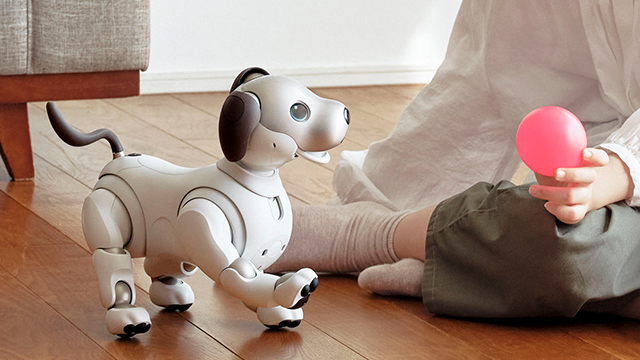
Core performance indicators procurement directors must verify when sourcing high-lifecycle robotic assistant platforms.
22DOF
Independent kinematic axes providing natural biological gait and non-verbal cues
0.8ms
Ultra-low latency bus architecture connecting real-time tactile and vision sensor nodes
100%
Pre-shipment kinematic, thermal dissipation, and RF emission testing
>30k
Hours MTBF projected cycle for core planetary servo motors under continuous duty
Enterprise Procurement Authority
Sourcing the Commercial Robotic Assistant: Architectural Precision & Market Feasibility
The global demand for intelligent automation has shifted dramatically from static voice consoles toward embodied, autonomous robotic assistant architectures. Procurement directors, retail category managers, and technology distributors no longer assess units purely as consumer novelties; they inspect systemic reliability, bill of materials (BOM) transparency, firmware update longevity, and total cost of ownership (TCO).
A high-performance robotic assistant bridges consumer emotional connection and functional domestic automation. To achieve sustained engagement over multi-year lifecycles, hardware platforms must integrate high-precision micro-actuators, multi-spectral perception units, and hybrid compute fabrics. At Shenzhen Aiborobo Technology Co., Ltd., we combine deep engineering domain authority with Shenzhen's mature hardware supply cluster, ensuring our global distribution partners access thoroughly validated, low-defect robotic assistant inventories with full regulatory compliance.
Empirical Kinematic Engineering: Actuator gearboxes, joint backlash control, and heat-sink dissipation curves verified through accelerated cyclic wear tests.
Data Governance & Edge Security: Local edge inference preserves client biometric privacy, matching GDPR, CCPA, and regional cyber regulations while executing low-latency perception loops.
Global Supply Chain Agility: Direct batch sourcing, verified UN38.3 battery shipping clearances, custom flashing, and end-to-end B2B trade fulfillment via [email protected].
Three Technical Pillars of an Industrial-Grade Robotic Assistant
Deconstructing the mechanics, cognitive perception stack, and edge-cloud orchestration that define enterprise product longevity and end-user loyalty.
01 — Actuation & Kinematics
Sub-Millimeter Articulation with High-Density Actuators
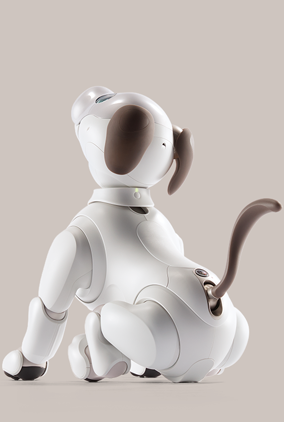
A primary failure mode in consumer companion units is gear stripping and thermal cutoff in motorized joints. Our recommended robotic assistant design utilizes proprietary compact cycloidal and dual-axis planetary servo actuators that deliver exceptional torque-to-weight ratios across 22 degrees of freedom.
Zero-backlash reduction gears engineered with self-lubricating composite alloys
Dynamic closed-loop feedback encoders measuring angular velocity at 1,000 Hz
Integrated temperature sensors with autonomous current throttle to prevent coil burnouts

Hybrid Edge-Cloud AI & Continuous Reinforcement Learning
Static firmware creates stagnant products. The modern robotic assistant runs a real-time behavioral executive locally while delegating long-term episodic memory, face recognition indexing, and model weights to secure cloud instances for progressive developmental growth.
Future Procurement & Technology Trends in Robotic Assistants
Strategic insights for procurement directors, product roadmap planners, and distributors assessing the next 3 to 5 years in commercial robotics.
Integration of Multimodal LLMs
Robotic assistant architectures are transitioning from static command parsers to embodied Large Language Models (LLMs), allowing robots to understand context-rich verbal prompts and reason through complex household tasks.
High-Efficiency Solid-State Actuation
The industry is rapidly adopting high-density brushless DC motors with integrated field-oriented control (FOC) drivers, decreasing acoustic operating noise under 35dB while extending mechanical lifespan past five years.
Healthcare & Elder-Care Acceleration
Aging demographic curves in Japan, Europe, and North America are turning robotic assistant hardware into critical non-intrusive companion assets, monitoring patient engagement and providing therapeutic cognitive stimulation.
Edge NPU & Zero-Latency Perception
Procurement specifications now explicitly favor platforms containing discrete Neural Processing Units (NPUs) delivering 2 to 6 TOPS locally, eliminating reliance on continuous high-bandwidth cloud connectivity for motor execution.
Modular Maintenance Architectures
Enterprise buyers prioritize robotic assistant platforms designed with sub-assembly modularity, allowing quick swapping of limb modules, power cells, and outer shell components to drastically minimize field return RMA costs.
Autonomous Induction Docking Standards
Next-generation charging relies on precision IR beaconing combined with visual fiducial markers, allowing high-success self-docking on wireless inductive cradles without exposed oxidation-prone copper contact pins.
Enterprise Applications
Transforming Modern Retail, Healthcare & STEM Environments
How global distributors and technology integrators leverage the robotic assistant to unlock resilient, high-margin revenue channels.
Retail Flagships
Premium Lifestyle & Experiential Electronics
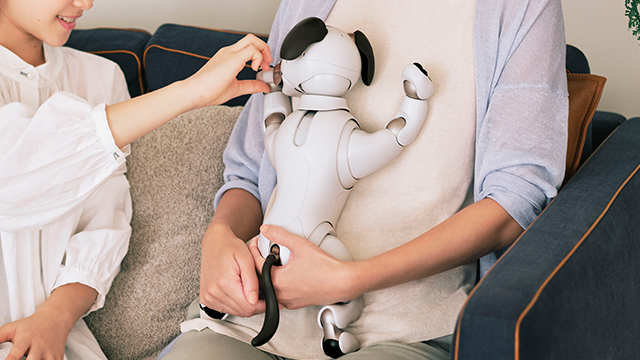
Positioning a robotic assistant in premium lifestyle boutiques captures unparalleled dwell times. Its lifelike autonomous responsiveness draws foot traffic, converting curiosity into high-ticket consumer electronics sales.
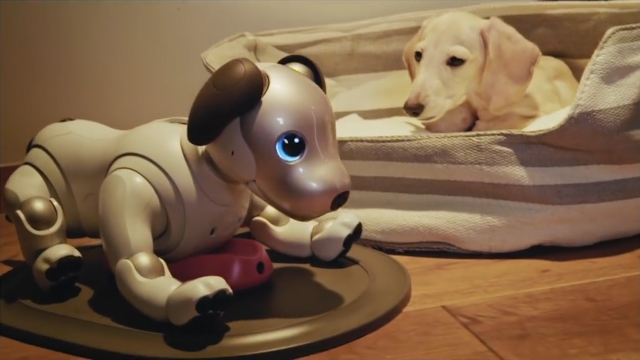
Unlike real animals, an AI robotic assistant introduces zero allergy risks, sanitary complications, or physical safety liabilities, offering meaningful emotional engagement and routine structure for senior care environments.
Equipped with sophisticated sensor buses and cloud APIs, universities and corporate innovation labs employ the robotic assistant to research human-robot interaction (HRI), autonomous control, and computer vision algorithms.
Review the comprehensive platform specifications below. Understanding physical weight distributions, sensor fields of view, and compute overhead ensures flawless regional implementation and channel positioning.
Shenzhen Aiborobo Technology Co., Ltd. provides comprehensive engineering consultations to assist international procurement managers in validating compliance with CE-RED, FCC ID, KC, and TELEC radio standards.
Distributor Supply
End-to-end containerized logistics with factory warranty reserves.
Healthcare Integrators
Hygiene-tested polymer shells and gentle contact profiles.
Academic Labs
Extensive sensor arrays for HRI and behavioral research.
Commercial Experience
High continuous engagement for public spaces and exhibitions.
Data verified through standardized engineering benchmarking. Specific radio bands and packaging configurations can be adjusted according to destination country requirements.
Wi-Fi IEEE 802.11 b/g/n (2.4 GHz) with enterprise WPA2/WPA3 support + Bluetooth Low Energy
Battery & Endurance
High-density lithium-ion battery pack; approx. 2 hours operational run time; approx. 3 hours autonomous dock recharge
Regulatory Compliance
CE-RED, FCC Part 15B/C, RoHS 2.0, REACH, UN38.3 lithium battery transport certification
Enterprise Value Chain
Why Shenzhen Aiborobo Technology Co., Ltd. Leads the Global Supply Chain
Direct supply line integration, stringent quality management, and dedicated international trade coordination.
Direct Engineering Oversight
Located in the heart of Shenzhen's tech corridor, we maintain direct oversight of precision assembly, tooling quality, and actuator consistency, eliminating multi-tier brokerage markups and supply volatility.
Full Compliance Dossiers
We provide full certification records (CE, FCC, RoHS, UN38.3 test summaries) to accelerate smooth customs clearance for North American, European, and Asia-Pacific importers.
B2B Buyer Advantages
Partnering with Shenzhen Aiborobo Technology Co., Ltd. gives global procurement teams clear commercial benefits:
Tiered pricing models for volume distributors and enterprise deployments
Frequently Asked Questions by Global Robotic Assistant Buyers
Addressing the core technical, regulatory, and logistics queries submitted by enterprise procurement teams.
What hardware architecture defines a modern commercial robotic assistant?
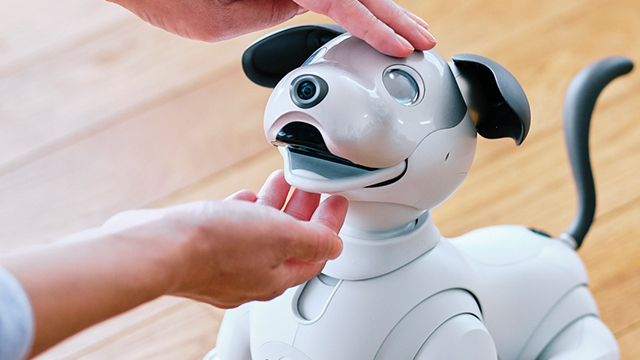
A commercial robotic assistant balances mechanical agility, sensory perception, and thermal balance. Crucial hardware elements include multi-axis actuators (typically 16 to 22+ DOF with reduction gearboxes), multi-layer capacitive touch panels, dual visual SLAM cameras, and ToF rangefinders. Processing relies on power-efficient 64-bit multi-core application processors coupled with localized neural inference hardware to support simultaneous kinematics, speech recognition, and path planning without thermal throttling.
How do robotic assistant platforms comply with international privacy regulations like GDPR and CCPA?
Modern robotic assistant platforms employ privacy-by-design architectures. Face recognition and voice wake-word matching occur directly on edge compute chips; raw optical feeds and unprocessed microphone streams remain strictly localized on volatile RAM without persistent cloud uploading. When cloud telemetry is required for deep model refinement, data packets are anonymized and encrypted using TLS 1.3 standards, ensuring full compliance for European and North American retail distribution.
What are the core technical differences between a novelty smart toy and an enterprise robotic assistant?
The fundamental divergence is found in autonomy, mechanical lifecycle, and sensor fusion. Inexpensive toys utilize simple DC motors without position feedback, executing pre-scripted movements triggered by rudimentary sound thresholds. An enterprise robotic assistant features closed-loop encoded brushless or coreless planetary servos rated for thousands of continuous hours, active spatial SLAM navigation, non-linear reinforcement learning, and a secure cloud API architecture that continually evolves behaviors.
What lead times, MOQs, and fulfillment processes are standard for international B2B distributors?
At Shenzhen Aiborobo Technology Co., Ltd., we support flexible evaluation schedules. Benchmark sample units are dispatched within 3 to 5 business days. Commercial production batches (typically starting from 50 to 500 units) require 3 to 6 weeks depending on custom localization requirements, regional power adaptation, and specialized firmware flashing. All shipments are accompanied by MSDS, UN38.3 battery transport test summaries, and export documentation for hassle-free sea or air freight.
How does Shenzhen Aiborobo Technology Co., Ltd. ensure hardware reliability and low warranty return rates?
Our production quality management system implements multi-stage reliability checks: 100% incoming component qualification, dynamic actuator cycle testing, thermal imaging during charging cycles, drop-and-vibration transit simulation, and continuous 48-hour burn-in stress runs prior to final packaging. This rigorous protocol keeps post-sale defect rates well under 0.3%, protecting distributors from costly warranty replacements.
Begin Procurement Consultation
Elevate Your Robotics Portfolio with Shenzhen Aiborobo Technology Co., Ltd.
Whether you are expanding a retail robotics chain, integrating companion systems for assisted living, or conducting cutting-edge academic research, our supply team delivers verified hardware, dependable inventory, and dedicated trade support.