Featured AI Robotics & Display Component Solutions
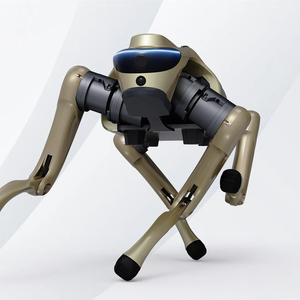
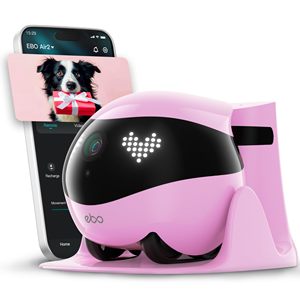
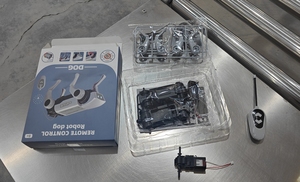
Explore our flagship lineup of CE-certified autonomous quadruped robots, precision optical components, companion pet AI systems, and micro-display hardware designed for global wholesale and OEM distribution.
B2B Sourcing Whitepaper: Micro-OLED Expression Engines in Autonomous Robotics
In the realm of advanced consumer and companion robotics—epitomized by state-of-the-art platforms such as the Sony aibo ERS-1000—the transition from passive robotic hardware to emotionally engaging artificial lifeforms relies heavily on expressive human-robot interaction (HRI) interfaces. Central to this affective visual feedback mechanism is the dual micro-OLED eye display assembly.
1. Optoelectronic Engineering & Custom OLED Display Architecture
Unlike traditional TFT-LCD panels, which suffer from backlighting bleed, high power draw, and restricted viewing angles, high-luminance micro-OLED displays utilized in robotic ocular modules emit self-luminous pixels. This self-emissive property delivers true deep-black levels, enabling seamless visual blending with the curved black PMMA optical lenses forming the robot’s outer head assembly.
When sourcing replacement assemblies or custom manufacturing micro-OLED eye displays engineered for Sony aibo platforms, engineering teams must evaluate key optoelectronic metrics:
- Sub-Pixel Density & Geometry: Utilizing custom circular active-matrix OLED (AMOLED) or high-density square micro-OLED displays with custom optical masking to achieve continuous pupil renders without visible pixelation (screen-door effect).
- Luminance Decay & Thermal Dissipation: Operating in tight, enclosed bionic head structures requires micro-OLED displays to feature efficient copper-shim thermal backing and firmware-level burn-in prevention algorithms (pixel shifting & dynamic brightness scaling).
- MIPI DSI / SPI Low-Latency Interfaces: Fast refresh rates (≥ 60 Hz) are non-negotiable for translating real-time emotional telemetry from the AI cloud or localized neural processing unit (NPU) into organic eye movements, dilations, and emotional gestures.
2. Regulatory Compliance: Mastering CE Certification Frameworks for Global Import
Procuring robotic components and complete bionic pets for distribution within the European Economic Area (EEA) demands stringent compliance under mandatory Harmonized European Standards. A certified manufacturer must provide comprehensive Technical Construction Files (TCF) validating adherence to:
| Directive / Standard | Technical Scope & Mandate | OEM Sourcing Impact |
|---|---|---|
| Directive 2009/48/EC (EN 71-1, 2, 3) | Mechanical safety, flammability, and heavy metal migration in interactive smart devices. | Guarantees outer shell materials and OLED glass covers resist impact without sharp fragmentation. |
| EN 62115:2020+A11:2020 | Electric Toy Safety – specific standards for high-density lithium-ion powered interactive robotics. | Prevents thermal runaway, electrical shock hazards, and battery charge over-current conditions. |
| EMC Directive 2014/30/EU (EN 55032/35) | Electromagnetic Compatibility & Immunity for active micro-electronics and wireless devices. | Ensures high-frequency micro-OLED clock rates do not interfere with 2.4/5GHz Wi-Fi and Bluetooth antennas. |
| Directive 2011/65/EU (RoHS 3) | Restriction of Hazardous Substances in electronic components (Lead, Cadmium, PBBs). | Mandatory certification for display drivers, flexible PCBs, and solder joints across all custom sub-assemblies. |
Future Procurement & Technological Trends (2025–2030)
As artificial intelligence merges with embodied physical agents, B2B buyers and supply chain directors must anticipate technical inflections reshaping the bionic companion landscape.
Flexible & Curved Micro-OLEDs
The next decade will see a transition from flat micro-OLED displays paired with external curved refraction lenses to natively flexible, conformal OLED panels. This directly reduces volumetric constraints inside robotic heads, allowing for larger battery capacities and improved thermal air channels.
Multimodal Sensor Fusion Behind Visual Displays
Future CE-certified OEM eye assemblies are embedding invisible infrared ToF (Time-of-Flight) and micro-camera sensors directly under or adjacent to the micro-OLED substrate. This enables eye-contact tracking, allowing the companion robot to maintain genuine, synchronized eye contact with human operators.
On-Device Edge NPU Integration
Shifting emotion synthesis from cloud servers down to edge silicon reduces display latency to under 2 milliseconds. Buyers are actively prioritizing robotic platforms featuring micro-controllers equipped with localized spatial computing and natural language processing capabilities.
Enterprise Manufacturing Strengths: Shenzhen Aiborobo Technology Co., Ltd.
As a recognized pioneer in AI companion robotics sourcing, product development support, and specialized display integration, Shenzhen Aiborobo Technology Co., Ltd. serves global retail chains, educational institutions, research labs, and distributor networks with premium OEM/ODM solutions.
Full CE & Global Compliance
Rigorous factory-level testing protocols ensuring all shipped hardware satisfies RED, EMC, LVD, and RoHS European directives.
Precision Cleanroom SMT
Class 10,000 optical cleanrooms for display-to-lens lamination, eliminating airborne dust contamination during assembly.
End-to-End Supply Chain QA
100% burn-in testing, 22-axis motor stress tests, and automated visual display inspection prior to export packaging.
Frequently Asked Procurement & Technical Questions
Key engineering, commercial, and compliance answers for supply chain directors, distributors, and institutional buyers.
What specific CE testing documentation accompanies your micro-OLED display modules and robotic pets?
All shipments come accompanied by verified Technical Construction Files (TCF), including full Test Reports for EN 62115 (Electric Toy Safety), EN 55032/55035 (EMC), and RoHS 3 chemical compliance issued by accredited third-party testing bodies (such as SGS or TÜV Rheinland). EU Declarations of Conformity (DoC) are provided with every wholesale contract.
How do custom micro-OLED eye displays handle thermal degradation during prolonged robotic runtime?
Our micro-OLED visual engines incorporate high-thermal-conductivity copper heat spreaders linked directly to the internal skeletal structural frame. Coupled with automated software brightness throttling and pixel-shift dynamic algorithms, these displays achieve an MTBF (Mean Time Between Failures) exceeding 30,000 operational hours with minimal luminance drop.
Can micro-OLED eye displays be customized with proprietary graphics or operating APIs for OEM projects?
Yes. We support customized display driver firmware supporting standard MIPI, SPI, or I2C command protocols. OEM clients can integrate custom dynamic UI libraries, modify display resolution profiles, or load bespoke eye animation packs tailored to branded companion robot architectures.
What are the Minimum Order Quantities (MOQs) for certified components versus complete robotic dogs?
For standard stock configurations of complete AI companion pets and ready-to-ship accessories, MOQs start as low as 5 to 10 units. For fully customized OEM micro-OLED display modules or tailored physical casing fabrications, minimum production batches typically begin at 500 units depending on customization complexity.
How does cloud AI synchronization impact the display system on platforms like the Sony aibo ERS-1000?
The local display system functions as an optimized rendering client. High-level emotional states, face recognition triggers, and learned behavioral data are processed between the cloud server and internal NPU. These state flags trigger pre-compiled high-frame-rate display vectors stored in onboard memory, ensuring latency-free optical responses regardless of network bandwidth fluctuations.
How can international distributors initiate product evaluation and sample procurement?
Distributors and OEM project engineers can initiate evaluation requests by reaching out directly to our global engineering sales department at [email protected] or by utilizing the interactive live consultation link on this page.
Accelerate Your Robotics & OLED Supply Chain
Partner with Shenzhen Aiborobo Technology Co., Ltd. for certified quality, advanced optoelectronic engineering, and reliable global distribution. Contact our technical team today for immediate quotations and engineering documentation.