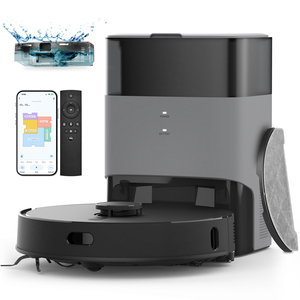
Enterprise Portfolio
Featured Industrial & Bionic Robotics Equipment
Direct-from-factory procurement lines featuring advanced inspection certification, multi-axis cobots, consumer mobile companions, and bionic AI robotics.
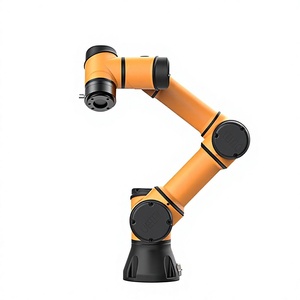
AUBO I10 Industrial Robot Arm Series Second-Hand Collaborative Robot 10 kg Payload Made in China PET Bag Packaging
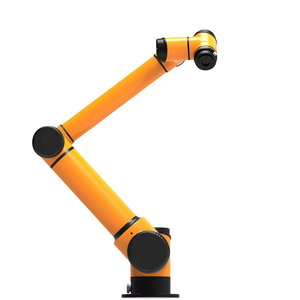
AUBO Collaborative Robot AUBO-i7 Applied in Gluing and Dispensing
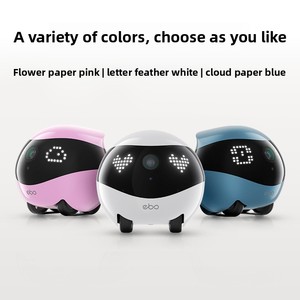
Enabot Whole House Mobile Camera Wireless Monitor Ebo Robot with Intelligent Walking Home Security
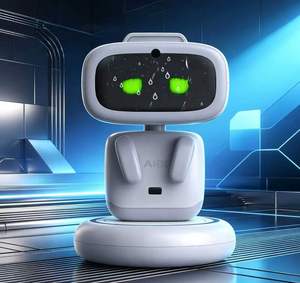
Smart AI Companion AIBI Robot Desktop Bionic Pet Multilingual Voice Interaction APP Controlled Interactive Home Desk Robot
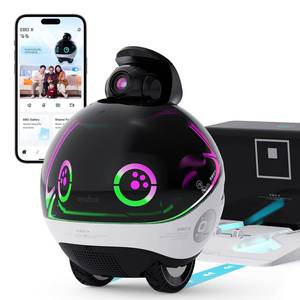
Enabot EBO X, a home robot, black (EBO X)
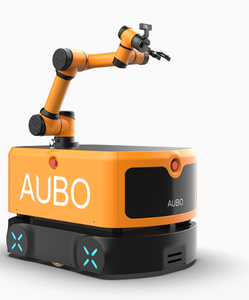
AUBO AMR300 Mobile Cobot 300kg Payload 1.3m/s Speed 52Ah Lithium Battery 6-Hour Endurance Heavy-Duty Palletizing Material 50
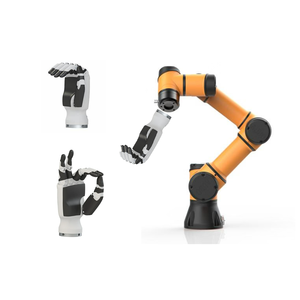
Pick and Place Robot Arm Aubo I3 Cobot Robot with Five Finger Gripper PLC Core Components 3kg Payload IP54
22 Axes
Kinematic Degrees of Freedom
100% CE
Full Directive Compliance
Cloud AI
Deep Neural Behavioral Sync
50+ Countries
Global Distribution Network
Whitepaper: Industrial Architecture and CE Regulatory Standards for Sony aibo & Bionic Companion Robotics
The consumer robotics sector has transitioned from rudimentary pre-programmed toys into sophisticated, autonomous cyber-physical systems. Within this evolutionary trajectory, the Sony aibo (notably the flagship ERS-1000 generation) represents the pinnacle of companion robotics engineering. Operating at the intersection of high-precision mechatronics, deep spatial awareness, and cognitive cloud intelligence, procuring such hardware requires global supply chain managers, commercial distributors, and technical project directors to thoroughly scrutinize manufacturing standards, component tracing, and comprehensive regulatory certifications.
Achieving authentic CE Certification (Conformité Européenne) for bionic quadruped systems is vastly more rigorous than standard consumer electronic goods. Because an autonomous robotic dog moves within uncontrolled domestic and commercial environments, interacts physically with infants and seniors, and continuously streams environmental sensory telemetry, the system must adhere strictly to harmonized European safety, radio, electromagnetic compatibility, and machine directives.
| CE Directive | Applicable Standards | Technical Engineering Focus | Risk Mitigation Target |
|---|---|---|---|
| Machinery Directive 2006/42/EC | EN ISO 12100, EN 60204-1 | 22-axis compact servomotor torque limits, pinch hazard reduction, rounded edge molding | Prevents mechanical pinch injuries and limb entrapment during erratic autonomous motion |
| Radio Equipment Directive (RED) 2014/53/EU | EN 301 489-1/-17, EN 300 328 | Wi-Fi IEEE 802.11b/g/n, LTE cellular module RF emissions, multi-band receiver sensitivity | Guarantees robust cloud synchronization without wireless channel congestion or RF interference |
| Low Voltage Directive (LVD) 2014/35/EU | EN 62368-1 | Autonomous docking contact terminals, internal lithium-ion pack BMS fail-safes | Prevents thermal runaway, electrical arcs, and charging dock short-circuit fires |
| RoHS 2 Directive 2011/65/EU | EN IEC 63000 | Lead-free soldering across 64-bit quad-core PCBs, non-toxic elastomer nose and paw pads | Chemical safety compliance for safe contact by children, domestic animals, and healthcare patients |
Procuring entities must understand that original tier-one robotic factories establish multi-stage Quality Assurance (QA) gates throughout fabrication. From automated optical inspection (AOI) of sub-miniature actuator control boards to continuous 72-hour thermal stress-testing of articulated joint gearboxes, factory-grade CE validation provides the baseline assurance required for smooth customs clearance and downstream liability mitigation.
Future Procurement Trends in Enterprise Bionic & Companion Robotics (2025–2030)
As international supply chains evolve, enterprise procurement managers must align sourcing frameworks with several disruptive macro trends shaping bionic robotics production:
Edge-AI & Local LLM Integration
Future iterations of companion robots are transitioning from cloud-dependent reasoning to low-power neural processing units (NPUs). This enables localized natural language inference and emotion recognition with zero latency and robust privacy protection.
High-Density Quasi-Direct Actuation
Factory tooling is advancing from high-ratio plastic gear trains to brushless direct-drive and quasi-direct-drive (QDD) actuators. This delivers compliant back-drivability, impact resistance, and silent, natural quadruped kinematics.
Modular Cyber-Physical Upgradability
Tier-one manufacturers are shifting to modular architectures. Chassis sub-assemblies, battery enclosures, and sensor clusters can be serviced or updated independently, lowering long-term total cost of ownership (TCO).
Technological Milestones: From Entertainment Novelties to Intelligent Bionic Entities
Understanding the evolutionary trajectory of systems like Sony aibo provides critical perspective for hardware valuation and market positioning:
First Wave: Kinematic Determinism (1999–2005) — Early generation aibo models (ERS-110 to ERS-7) broke new ground in consumer mechatronics with up to 16 degrees of freedom, basic color cameras, and memory stick scripting. However, processing was purely local and state-machine-driven, resulting in repetitive behavioral loops.
Second Wave: Cloud Neural Symbiosis (2018–Present) — The modern ERS-1000 generation completely re-engineered this paradigm. Featuring 22 compact specialized actuators developed in-house, two expressive dual-color OLED eye displays, capacitive touch arrays spanning head, chin, and back, and front/rear simultaneous localization and mapping (SLAM) cameras, it continuously uploads behavioral parameters to an AI cloud infrastructure. Each unit's personality develops uniquely based on real-world family interactions.
Third Wave: Embodied General Intelligence (Next-Gen Convergence) — Modern bionic robotics merges multimodal foundation models with robotic hardware. Vision-Language-Action (VLA) architectures enable robots to perceive domestic environments semantically, comprehend multi-intent spoken instructions, and autonomously generate context-appropriate affective actions.
Strategic Factory Verification Checklist for B2B Importers
When sourcing high-value companion robotics, B2B procurement professionals must conduct thorough supplier audits across four critical operational dimensions:
1. Hardware Pedigree
Demand documented bills of materials (BOM), verified origin reports for core servomotors, optical glass lenses, and medical-grade silicone touch contact points.
2. Telemetry Compliance
Verify that regional LTE/Wi-Fi configurations match target local telecommunications regulations (e.g., CE-RED, FCC ID, MIC Telem standard certifications).
3. Cloud API Continuity
Confirm authorized regional server hosting availability, GDPR/CCPA consumer data compliance, and enduring over-the-air (OTA) update infrastructure.
4. Component Availability
Ensure suppliers guarantee minimum 5-year replacement parts availability for critical wear components, including gait footpads, internal gearing, and lithium cells.
Why Partner With Shenzhen Aiborobo Technology Co., Ltd.
Navigating global procurement channels for high-end companion robotics and industrial cobots requires deep engineering fluency, direct factory relationships, and transparent international logistics. Shenzhen Aiborobo Technology Co., Ltd. serves as an authoritative global bridge, supporting distributors, institutional labs, and commercial enterprises with unmatched operational capabilities:
Experience-Led Insights
We provide consultative technical evaluations based on real-world operational deployments across healthcare, education, and retail environments—delivering insights far beyond basic specification sheets.
Rigorous Technical Clarity
Our engineering team clarifies sensor integration, cloud licensing plans, and regional firmware configurations before shipment, ensuring smooth compliance and seamless operational rollout.
Global Service Mindset
From pre-order sample testing to bonded warehousing and multi-territory warranty management, our supply chain specialists provide dependable end-to-end lifecycle support.
Frequently Asked Questions: B2B Sourcing & Compliance
What is the Sony aibo ERS-1000 and how does its architecture differ from standard robotic toys?
The aibo ERS-1000 is an AI-powered bionic robotic quadruped engineered specifically as an emotionally responsive companion. Unlike traditional consumer toys that loop hardcoded animation cycles, aibo combines 22 precision axes of motion, two expressive OLED eye displays, dual SLAM visual tracking cameras, a four-microphone directional beamforming array, capacitive touch sensors, and a deep-learning cloud backbone. Its behavior evolves dynamically based on user interaction, facial recognition, and continuous environmental mapping.
What CE test reports must be provided by suppliers prior to bulk import?
B2B buyers should request the complete Technical Construction File (TCF), including: (1) Test certificates verifying compliance with RED Directive 2014/53/EU (covering RF spectrum and wireless protocols); (2) EMC test reports to EN 301 489-1/-17; (3) Electrical safety certifications to EN 62368-1; and (4) RoHS chemical compliance declarations verifying the absence of hazardous substances across all housing plastics, internal wiring, and silicone touchpads.
How are cloud connectivity and service subscriptions handled across different global regions?
The aibo platform utilizes region-specific cellular and Wi-Fi cloud connectivity tied to dedicated Sony AI Cloud infrastructure. Enterprise and retail buyers must confirm regional variant compatibility (e.g., Japan domestic, US, or international revisions) before ordering. Shenzhen Aiborobo Technology Co., Ltd. provides direct guidance on ensuring cloud plan connectivity, licensing terms, and localized network operability for your target deployment market.
What is the typical battery endurance and charging station setup?
The robot runs for approximately 2 hours of continuous active locomotion and interaction on a single charge. Recharging takes roughly 3 hours. Equipped with rear-mounted SLAM cameras and floor-sensing photodetectors, the robot autonomously detects its charging station marker and docks automatically when battery levels drop, ensuring continuous, autonomous operation.
Which commercial channels and enterprise applications benefit most from companion robots?
Beyond high-end consumer retail, high-precision bionic robots see strong commercial demand in: (1) Specialized senior living and memory care facilities, where robotic pets provide clinically demonstrated cognitive comfort without biological hygiene concerns; (2) University and corporate STEM robotics labs focusing on quadruped gait kinematics and human-robot interaction (HRI); and (3) Flagship commercial showrooms, luxury retail displays, and experiential hospitality environments seeking memorable brand engagement.