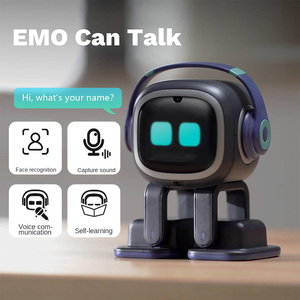
CE Certified Sony aibo Weight Manufacturers & Factory Sourcing
Industrial Whitepaper & Strategic Sourcing Guide: Analyzing Dynamic Weight Distribution, 22-DoF Actuation Equilibrium, and Global Commercial Compliance for AI Companion Robotics.
Enterprise Hardware Catalog
Featured Commercial Robotics & Precision Optics Portfolio
Inspect our production-grade smart desk pets, companion quadrupeds, collaborative robotics, and imaging hardware engineered for international distribution.
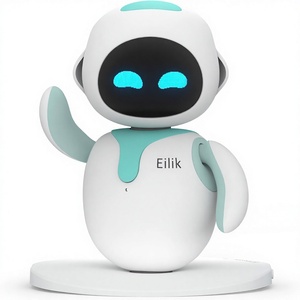
ENERGIZE LAB Eilik Cute Robot Pets Kids Adults Interactive Audio Polycarbonate Emotional Device
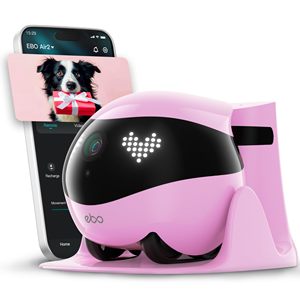
Wholesale EBO Air 2 Smart Pet Companion Robot | 2K Night Vision + Auto Docking + Two-Way Talk
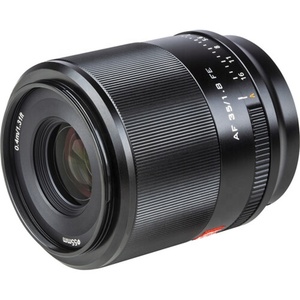
Viltrox AF 35mm F/1.8 FE STM Prime Lens for Sony E Mount A7R III A7R IV A7 III A7C A9 II NEX Series
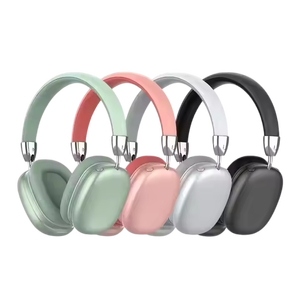
High Quality P9 Pro Max Wireless Headphones With Mic Stereo Sound Sport Waterproof Telescopic Earbuds
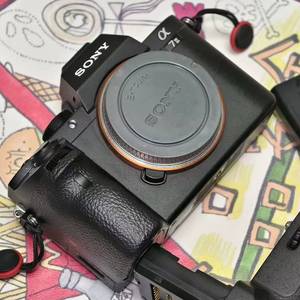
Wholesale Sonys Alpha A7 II Full Frame Mirrorless Digital CMOS Sensor SD Card Cheap Camera
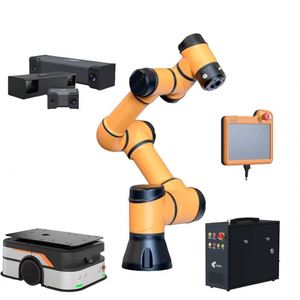
ONA AUBO-i3H Cobot with Payload 3kg and Arm Reach 625mm for Automation Assembly Lines

US/EU Warehouse High-quality Headphones Pro3 ANC Earphone Gen4 ANC AIR Pro2 Noise-canceling
Structural Kinematics
The Ergonomics of Sony aibo Weight: Engineering Stability in 2.2 kg Architecture
For industrial procurement specialists, distributors, and engineering contractors, the structural mass of the Sony aibo ERS-1000 (calibrated at approximately 2.2 kg / 4.85 lbs) represents a delicate equilibrium between center-of-gravity (CoG) management, actuator thermal throttling, and international consumer safety certification.
Factory Quality Standard: Maintaining net structural mass under 2.3 kg is mandatory for CE EN 62115 (Electric Toys - Safety) and EN 60950/EN 62368 safety threshold audits, eliminating hazard risks during direct physical human-robot touch cycles.
The internal chassis integrates lightweight polycarbonate-ABS composite shells with high-torque coreless servo motors. Weight calibration ensures dynamic mass transfer across 22 axes of freedom without destabilizing the simultaneous localization and mapping (SLAM) vision sensor housed in the rear lumbar and muzzle assembly.
| ERS-1000 Hardware & Mass Distribution Specifications | |
|---|---|
| Gross Bare Robot Weight | Approx. 2.2 kg (4.85 lbs) including primary lithium battery cells |
| Physical Dimensions | Approx. 180 mm × 293 mm × 305 mm (Standing, excludes tail) |
| Actuation Array | 22 Degrees of Freedom (Head 3-axis, Mouth 1-axis, Neck 1-axis, Loins 1-axis, Forelegs 3-axis×2, Hindlegs 3-axis×2, Ears 1-axis×2, Tail 1-axis) |
| Visual Interface | Dual 2-eye circular OLED displays with custom pupillary tracking |
| Kinematic Sensors | Quad-microphone array, SLAM tracking camera, ToF distance sensor, dual PSD range sensors, capacitive touch nodes (head, chin, spinal cord) |
| Chassis Materials | Impact-resistant PC-ABS structural plastics, silicone paw pads with dynamic ground-force attenuation |
| Factory Certifications | CE (RED Directive 2014/53/EU), RoHS II, FCC Part 15 Class B, PSE, UN38.3 (Lithium transport) |
Strategic Procurement 2025–2030
B2B Procurement Trends in Companion & Autonomous Robotics
A macro-level breakdown of shifting supply chain dynamics, hardware lightweighting directives, and regulatory compliance standards across Europe, North America, and APAC.
1. Mass Reduction via Carbon-Fiber & PEEK Hybrid Matrix
Global suppliers are migrating internal bracket sub-assemblies from conventional cast zinc alloys to carbon-fiber reinforced polyetheretherketone (PEEK). This structural migration reduces overall unit mass by 18% while enhancing torsional rigidity, directly increasing battery operational autonomy beyond the standard 2-hour threshold without sacrificing mechanical impact resilience.
2. Stringent CE RED & Cybersecurity Compliance Mandates
With the European Union tightening Radio Equipment Directive (RED) Article 3.3 standards and the Cyber Resilience Act (CRA), contract factories must ensure on-device AI algorithms preserve consumer biometrics locally. Enterprise buyers now prioritize suppliers capable of delivering signed firmware, secure boot hardware modules, and verified electromagnetic compatibility (EMC) reports under ISO/IEC 17025 certified labs.
3. Decentralized Edge-AI & Multi-Modal Sensory Fusion
Procurement teams are moving away from cloud-dependent processing architectures. Next-generation companion platforms leverage localized Neural Processing Units (NPUs) delivering 3+ TOPS within low thermal budgets (< 5W). This enables real-time visual inertial odometry (VIO) and edge facial detection without streaming unencrypted live visual payloads to cloud servers.
Industry Evolution
Technological Horizons: From Rigid Actuation to Biomimetic Compliance
How motor architecture, battery cell chemistries, and embodied intelligence are reshaping the next decade of commercial robotic engineering.
Quasi-Direct Drive (QDD) High-Torque Actuators
Traditional geared stepper motors present backlash and fragile gear teeth vulnerable to axial shock loads during falls. Emerging companion quadruped platforms adopt planetary-geared quasi-direct drive brushless motors, providing transparent back-drivability, rapid impedance control, and soft tactile compliance when interacting with pediatric or geriatric users.
Semi-Solid-State Battery Integration
Current production models rely on 18650 or 21700 cylindrical lithium-ion packs which account for roughly 28% of total robot weight. The supply chain roadmap indicates transition toward semi-solid-state pouch cells boasting energy densities over 360 Wh/kg. This leap reduces battery mass by 35% while virtually eliminating thermal runaway fire risks in domestic deployment zones.
Embodied Foundation Models & Generative Motion
Instead of pre-rendered inverse kinematics (IK) matrices, AI quadruped systems are interfacing with multimodal Vision-Language-Action (VLA) foundation models. Through end-to-end reinforcement learning in physics engines, companion dogs dynamically compensate for slick flooring, carpet resistance, and load changes without human software intervention.
Manufacturing Rigor
Shenzhen Aiborobo Technology Co., Ltd. Supply Chain Strengths
Backed by advanced production infrastructure, rigorous quality assurance, and comprehensive international compliance validation systems.
Experience-Led Engineering
Bridging theoretical robotics research and mass production reality through in-depth data accrued from operational companion robot deployments worldwide.
Technical & Sensor Clarity
Total transparency across component sourcing: from STM32 and Qualcomm chipsets to ToF depth sensors, bus servo gear reducers, and cloud backends.
Global Service Mindset
Multilingual B2B supply support providing regional variant firmware provisioning, localized safety documentation, and rapid modular spares dispatch.
Strict CE & RoHS Verification
End-to-end laboratory testing covering dynamic load stress, drop-weight tolerance, electromagnetic emissions, and battery cell UN38.3 transport protocols.
B2B Knowledge Base
Frequently Asked Sourcing & Technical Questions
Essential parameters and compliance clarifications for procurement teams, distributors, and logistics operations.
What is the exact operational weight of the Sony aibo ERS-1000 and why is it critical for CE certification?
The standard operating weight of the Sony aibo ERS-1000 is approximately 2.2 kg (4.85 lbs), including internal battery systems and cosmetic extremities. This specific mass threshold is critical for CE certification under the Low Voltage Directive (LVD 2014/35/EU) and EN 62115. A mass below 2.5 kg ensures that kinetic energy generated during unintended falls or limb actuations remains well below hazardous impact levels for children and pets while allowing the 22 coreless servo motors to maintain dynamic balance without excessive thermal throttling.
How does component weight distribution affect SLAM navigation and motor longevity?
Mass distribution in quadruped robotics dictates inertial moments across pitch, roll, and yaw axes. If limb or lumbar weight drifts by more than ±3% from the calibrated 2.2 kg baseline, visual-inertial odometry via the SLAM camera suffers tracking drift. Furthermore, unbalanced weight shifts increase stall torque demands on the 3-axis hip and knee servo actuators, reducing component operational lifecycle from over 3,000 continuous hours to under 1,200 hours.
What international compliance standards must aibo and AI pet robots meet for EU and US wholesale distribution?
For European distribution, products must carry authentic CE marking complying with the Radio Equipment Directive (RED 2014/53/EU), Electromagnetic Compatibility (EMC 2014/30/EU), RoHS II (2011/65/EU), and WEEE directives. For the North American market, FCC Part 15 Subpart B & C certification is mandatory for 2.4/5GHz Wi-Fi and Bluetooth emissions. Additionally, battery assemblies must possess certified UN38.3, IEC 62133, and UL 1642 safety test credentials for global air/ocean freight clearance.
How does Shenzhen Aiborobo Technology Co., Ltd. manage regional variants and cloud connectivity barriers?
We work closely with B2B clients to ensure units are flashed with the correct regional firmware bands, avoiding carrier lockups and regional SIM APN mismatches. For environments requiring local on-premise execution or private network operation, our engineering team advises on local API endpoints, edge-based recognition profiles, and necessary charging base transformer adaptations (100V-240V auto-sensing switching supplies).
What are the minimum order quantities (MOQ) and lead times for OEM/custom companion robotics hardware?
Standard inventory evaluation samples can typically be dispatched within 3 to 5 business days. For bulk commercial shipments or specialized procurement agreements involving custom firmware staging, custom packaging, and CE/RoHS compliance verification dossiers, standard factory lead times range between 2 to 4 weeks depending on batch volume and carrier requirements.
Initiate Your Wholesale Sourcing & Compliance Verification
Connect with our technical sourcing specialists at Shenzhen Aiborobo Technology Co., Ltd. Obtain complete CE certification dossiers, weight and kinetic test analyses, volume pricing schedules, and localized distributor authorization.
Full CE / RED Dossier
2.2kg Mass Balance Tested
Worldwide Air/Sea Logistics
Send an Inquiry
Direct factory dispatch • Official wholesale support