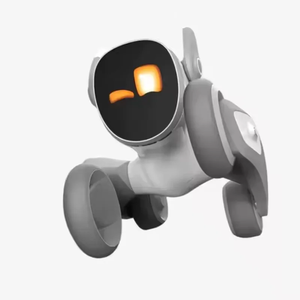
Commercial Logistics Portfolio
Featured AI Companion Robotics, Charging Docking Platforms & Precision Components
Direct supply-chain nodes connecting certified tier-1 robotics peripheral manufacturers with worldwide channel importers.
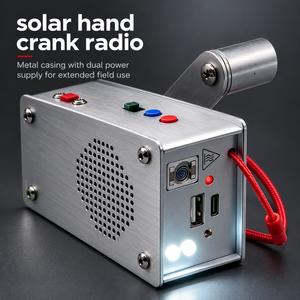
Rugged Aluminum Drop Resistant Hand Crank Generator USB Charger LED Torch Lighter Radio for Disaster Survival Camping
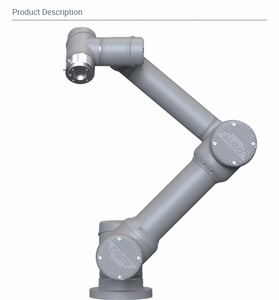
Aubo C5 Six-Axis Robot Arm 886.5mm Reach 5kg Payload Motor IP54/IP65 PLC Control 110/220/380V Industrial Use New Used
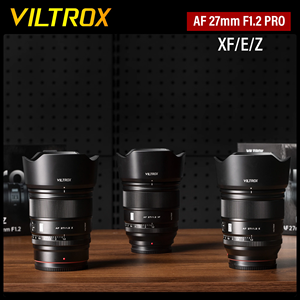
VILTROX 75mm F1.2 Fuji X Sony E Nikon Z Large Aperture APSC Portrait Autofocus Lens X-T5 X-H2S X-Pro3 Sony A6600 FX30 ZV-E10
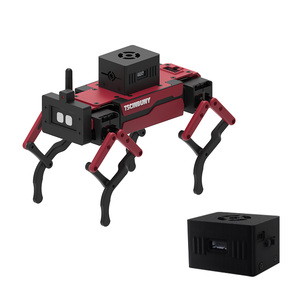
Tscinbuny AI Quadruped Robot Dog with Camera, High-Torque Servo, Embodied Intelligence STEM Kit
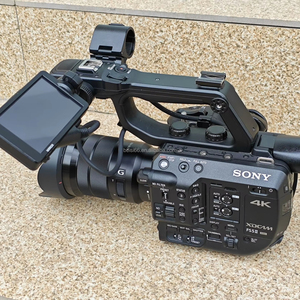
90% New Sonys PXW-FS5 Super 35 Video Conference System 4K Camcorder with 2X Optical Zoom
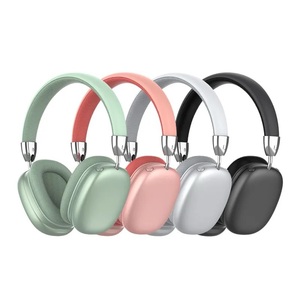
P9 PRO MAX Over-Ear Headphones Strong Bass for 5.0 IPX7 Waterproof Cheap Wireless
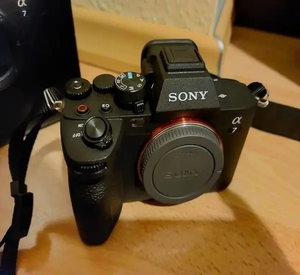
Alpha A7 IV Mirrorless Camera with 28-70mm Lens and Optical Image Stabilization
99.4%
Autonomous Docking Alignment Tolerances Under SLAM Guidance
50,000+
Spring-Loaded Pogo Pin Contact Durability Cycles Tested
70+
Global Export Markets Serviced via Direct Shenzhen Logistics
3-Stage
Multi-Region Voltage Regulated Surge & CC/CV Thermal Safety Matrix
Engineering Architecture: Sourcing OEM/ODM Sony Aibo Charging Docks
In the hyper-specialized landscape of autonomous quadruped robots and emotional companion platforms such as the Sony aibo ERS-1000 series, precision charging dock infrastructure acts as the vital lifeline of system continuity. Wholesale procurers, regional electronics importers, and robotic service centers frequently encounter substantial supply bottlenecks when attempting to acquire certified OEM-standard base docks, charging mats, and precision AC switching adapters. A high-fidelity charging dock for the Sony aibo is significantly more than a mechanical resting station; it serves as a dual-modality engineering ecosystem integrating high-efficiency thermal equilibrium management, precise autonomous optical target positioning, and transient-voltage isolated power delivery.
Key Engineering Fact: The Sony aibo ERS-1000 utilizes simultaneous spatial SLAM mapping and ceiling-directed visual odometry to compute its homing vectors. The docking station base incorporates retroreflective fiducial alignment matrices alongside specialized geometric gradient contours that enable the robot's belly-mounted charging terminals to seat with sub-millimeter precision against high-conductivity beryllium copper pogo pins.
From an electrical architecture perspective, charging companion robotics demands a high-integrity Constant-Current/Constant-Voltage (CC/CV) power trajectory. Companion robots house high-density lithium-ion battery assemblies within articulated chassis assemblies subject to thermal containment challenges. China's top-tier manufacturing facilities situated across Shenzhen and Guangdong have achieved global leadership in reverse-architecting, optimizing, and manufacturing compatible docking assemblies that mitigate localized thermal surges, ensure electromagnetic compliance (EMC/FCC/CE), and prevent impedance degradation across long operating lifetimes.
Optical Fiducial Targets
High-contrast, non-glare geometric patterns calibrated for monochromatic robotic sensor arrays to facilitate autonomous self-docking under varied ambient lux conditions.
Low-Impedance Terminals
Heavy gold-plated sprung terminal contacts rated up to 10A surges, exhibiting negligible oxidation and zero galvanic corrosion during persistent cyclic engagements.
Multi-Tier Safety Interlocks
Embedded thermal cut-off micro-fuses, short-circuit auto-recovery, and intelligent zero-voltage quiescent standby modes when the robotic pet is unseated.
Future Procurement Trends in Companion Robot Infrastructure (2025–2030)
The procurement landscape for embodied AI accessories and automated recharging hardware is undergoing massive generational shifts. Institutional buyers, senior living healthcare providers, enterprise robotic showrooms, and consumer electronics distributors must navigate four macro-level industrial transitions when executing bulk sourcing agreements:
1. GaN (Gallium Nitride) Semiconductor Integration
Traditional silicon-based charging bricks are rapidly becoming obsolete in commercial import portfolios. Next-generation wholesale charging docks engineered in China are adopting ultra-compact GaN fast-charge architectures. This transition yields an approximate 35% reduction in peripheral volumetric footprint, 40% reduction in idle thermal radiation, and comprehensive universal 100V–240V wide-band AC frequency compatibility, substantially minimizing international SKU proliferation for global importers.
2. Contactless Inductive & Resonant Magnetic Interfaces
While mechanical pogo-pin terminals remain the cost-effective standard for companion pets like the ERS-1000, high-end procurement requirements are moving toward hybrid inductive magnetic docking pads. Resonant charging accommodates broader positional tolerances, eliminating physical mechanical abrasion on gold-plated robotic contact pads, thereby entirely removing the primary failure point identified in corporate warranties: terminal oxidation and structural pin buckling caused by misalignment.
3. Standardized Multi-Pet Ecosystem Base Stations
Commercial venues such as eldercare facilities, STEM academies, and retail demonstration spaces increasingly manage multi-brand companion robot fleets (e.g., Sony aibo, Loona, Unitree quadruped educational kits). Wholesale procurement demand is pivoting towards modular, multi-bay charging plates featuring adaptable, auto-sensing voltage profiles capable of simultaneously recharging heterogeneous robotic hardware through dynamic load distribution.
Technological Development Trends: Evolution of Autonomous Replenishment
Robotic docking stations are evolving from passive electrical sockets into communicative, edge-computing micro-nodes within smart home and commercial topologies. Understanding these technical trends is essential for international buyers who wish to preserve inventory liquidity and mitigate obsolescence:
A. Edge-Assisted Spatial Docking Beacons: Future iterations of companion charging docks are embedding micro-IR beacons and ultra-wideband (UWB) localized radio emitters. This hardware augmentation assists onboard neural network models during low-light conditions, allowing the robot to execute low-latency homing without activating power-intensive visual SLAM calculations, thus avoiding terminal shutdown events before successful contact seating.
B. Regenerative Health Telemetry & Battery Analytics: Advanced Chinese contract manufacturers are integrating bidirectional serial data links directly within the contact pins of commercial-grade docks. This configuration enables real-time reporting of cell internal resistance, thermal saturation curves, and cyclic degradation directly to centralized fleet diagnostic dashboards or companion mobile applications, reducing secondary RMA maintenance overhead by up to 28%.
Enterprise Strengths: Shenzhen Aiborobo Technology Co., Ltd.
Navigating cross-border procurement of high-precision Sony aibo charging docks and embodied robotics components demands an authoritative supply partner with verified domain expertise. Shenzhen Aiborobo Technology Co., Ltd. bridges the gap between sophisticated engineering standards and reliable, international commercial execution.
Supply-Chain Dominance
Direct Manufacturer Synergies
Headquartered in the epicenter of the world's electronics supply network in Shenzhen, we secure direct allocations, OEM tooling rights, and volume pricing benefits unavailable to generic trading intermediaries.
Rigorous QA Standards
Parametric Bench Testing
Every batch of power supplies and docking stations undergoes 100% full-load burn-in evaluations, 10,000-cycle pogo pin deflection tests, and automated oscilloscopic ripple voltage verifications.
Regulatory Readiness
Full Global Compliance
Our export items carry complete, auditable certification suites including UL, CE, FCC, RoHS, PSE, and UKCA, guaranteeing frictionless clearance across North American, European, and Asian customs ports.
Procurement & Technical FAQ for Global Wholesalers
Q
Are these charging docks compatible with both Japanese and US editions of Sony aibo?
Yes. The mechanical seating contour, pin distance pitch, and electrical input thresholds of our Sony aibo ERS-1000 compatible docking stations comply identically with the universal hardware schematics across all regional releases. Our adapters feature 100V–240V wide-voltage compatibility.
Q
What is the Minimum Order Quantity (MOQ) and sample lead time?
For evaluation benchmarks and distributor lab validations, we support sample batches starting at 2 to 5 units delivered via priority air express (3–5 working days). Standard commercial wholesale production MOQ starts at 50 units with custom branding tiers starting at 500 units.
Q
How do you solve robotic slipping or docking failure on hardwood and slick flooring?
Our export charging dock bases feature high-tack, non-migrating medical-grade silicone rubber footpads engineered with micro-suction geometry, preventing base movement when the robot makes forceful contact while executing backing maneuvers.
Q
Can you provide custom packaging and private label SKU assembly?
Absolutely. We provide complete OEM/ODM industrial packaging services including drop-tested corrugated cartons, custom foam inserts, multilingual regulatory manuals, and private barcode/SKU serialization compliant with Amazon FBA and big-box distribution centers.