Critical Hardware Components & Precision Optics for Companion Robotics R&D
Sourcing reliable high-aperture lenses, machine vision sensors, precision test mounts, and collaborative robotic automation systems to assemble, calibrate, and bench-test the Sony aibo ER/ERS series architecture.
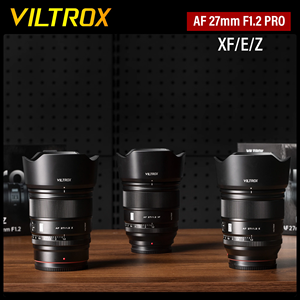
VILTROX 75mm F1.2 Large Aperture APSC Autofocus Lens
Ultra-wide aperture testing lens providing exceptional resolution and minimal chromatic aberration for bionic robotics camera module benchmarking and spatial visual sensor calibration.
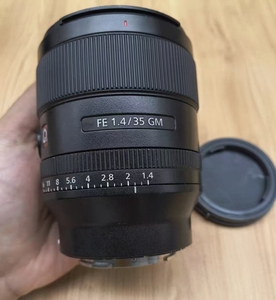
Used Full Frame Wide Angle FE 35mm F1.4 GM E-Mount Lens
Original Sony G Master precision metal optics used as reference optical test-benches for SLAM depth tracking, facial recognition machine vision, and wide-angle low-distortion alignment.
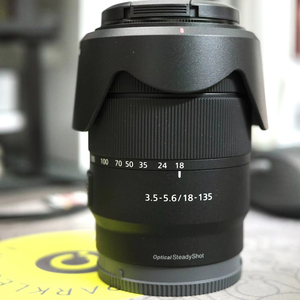
Sony E 18-135mm F/3.5-5.6 OSS Zoom Lens Assembly
Optical SteadyShot zoom system suited for robotics vision simulation suites, motion capture tracking rigs, and dynamic optical compensation evaluation under variable illumination.
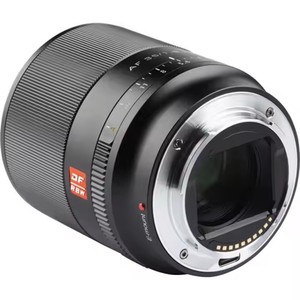
Viltrox AF 35mm F/1.8 FE STM Prime Lens (Sony E-Mount)
Integrated STM stepping motor delivering silent, rapid focusing dynamics for real-time tracking algorithms and multi-sensor companion robotics visual verification chambers.
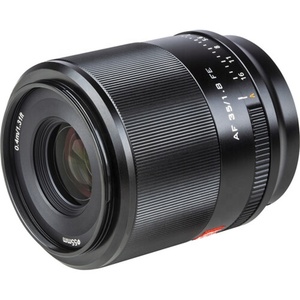
Viltrox AF 35mm F/1.8 FE STM Prime Optical Core
Precision multi-layer nano-coated lens assembly delivering high contrast and resolving power for high-density edge AI vision computing systems and visual Odometry systems.
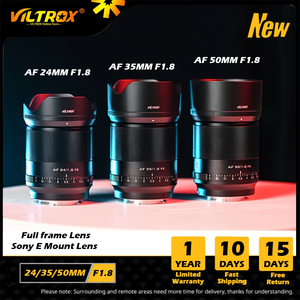
VILTROX 24mm / 35mm / 50mm F1.8 Auto Focus Optical Triad
Comprehensive multi-focal focal length testing kit allowing robotics optical engineers to optimize wide-field navigation, object identification, and close-range facial recognition arrays.
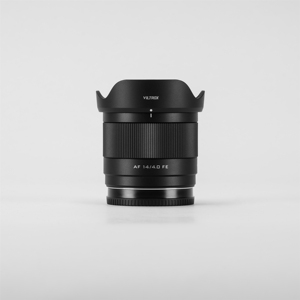
Viltrox Full-Frame AF 14mm F4.0 Air Ultra-Wide Lens
Ultra-compact, low-distortion wide-angle field coverage ideal for top-down ceiling visual localization and environment obstacle mapping sensor calibration in bionic robotics lines.
AUBO-i3 Lightweight Collaborative Robot (3kg Payload)
Industrial 6-axis precision collaborative arm designed for high-repeatability micro-servo assembly, actuator torque calibration, and automated production testing of bionic pet robots.
From ERS-110 to ERS-1000: The Mechatronic Paradigm Shift
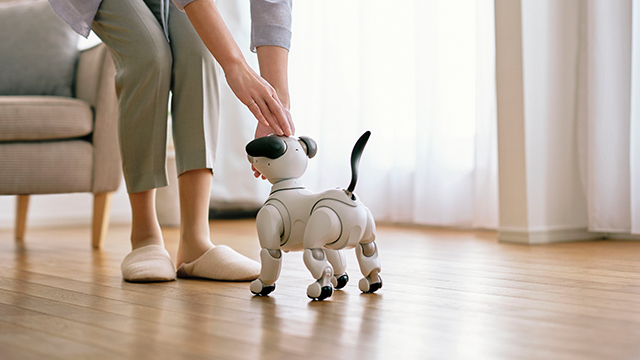
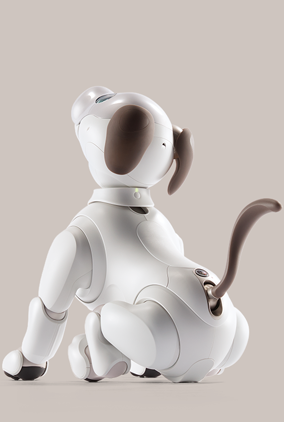
The Sony aibo ER (Entertainment Robot) ecosystem represents more than two decades of pioneering mechanical design, cybernetic control, and emotional artificial intelligence. What began in 1999 with the angular ERS-110 and matured through the iconic ERS-7 has evolved into the sophisticated, organic cybernetics of the ERS-1000.
For international supply chain managers and electronics brands seeking Chinese manufacturing partners capable of developing or assembling equivalent bionic platforms, understanding this hardware architecture is crucial. Modern quadruped companion robots integrate micro-actuators with dual-axis planetary gears, custom magnetic encoders, and composite skeleton housings that demand sub-micron manufacturing tolerances.
- Kinematic Multi-Axis Motion: 22 proprietary actuators driving head yaw/roll/pitch, jaw action, individual leg joints, flexible spine bending, and expressive ear/tail articulation.
- Heterogeneous Sensing Matrix: Time-of-Flight (ToF) distance measurement, capacitive touch sensing arrays (crown, chin, spine), 6-axis IMUs, and paw-ground pressure sensors.
- SLAM Spatial Mapping: Dual camera system incorporating nose-mounted forward vision and dorsal-mounted SLAM cameras for autonomous home navigation and self-charging.

Evolutionary Matrix: Sony Aibo ER / ERS Generations
Technical baseline comparison highlighting the shifts in computational distribution, actuation precision, and optical sensor modules.
| Architecture Feature | Legacy Series (ERS-210 / ERS-311) | Mid Generation (ERS-7 / Mind 3) | Modern Benchmark (ERS-1000 Platform) | Next-Gen China OEM Capabilities |
|---|---|---|---|---|
| Degrees of Freedom (DoF) | 15 - 20 Axes (Open spur gears) | 16 Axes (Integrated feedback) | 22 Axes (Custom brushless micro-actuators) | 22 - 28 Axes with High-Torque BLDC Servos |
| Vision & Perception | Single 100k-pixel CMOS / Infrared distance | 350k-pixel CMOS / Dual distance sensors | Dual Cameras (Fisheye SLAM + Nose Object Cam) | 3D ToF Sensors, 4K HDR SLAM, AI Object Arrays |
| Expressive Interface | LED arrays on face and tail | Multi-color LED mask + touch sensors | Dual round OLED displays with real-time pupillary reflex | Micro-OLED, Dynamic Holographic, Haptic Skin |
| Computational Core | MIPS R4000 RISC 64-bit (Integrated) | 64-bit RISC processor (AIBOware) | 64-bit Quad-Core CPU + LTE/Wi-Fi Cloud Sync | NPU Edge-AI Processing (Up to 32 TOPS) + Wi-Fi 6 |
| Acoustic Spatial Array | Stereo omnidirectional microphones | Stereo mics + vibration sensing | 4-Microphone Beamforming Directional Array | 6-Mic Array with Deep-Learning Noise Suppression |
Future Procurement & Technological Trends in Bionic Robotics
Strategic procurement insights for commercial buyers, tier-one distributors, and educational research institutes navigating the rapid convergence of mechanical intelligence and LLM-driven embodiment.
Multimodal Generative AI at the Edge
Companion robotics procurement is rapidly shifting from rule-based behavior trees to on-device Multimodal Large Language Models (MLLMs). By deploying low-power neural processing units (NPUs) within the robot chassis, next-generation bionic pets synthesize visual, acoustic, and tactile inputs concurrently, delivering natural personality emergence without requiring perpetual cloud connectivity.
High-Torque Density Micro-Actuators
Supply chains based in Shenzhen and the Greater Bay Area are heavily optimizing coreless motors and planetary cycloidal gearboxes. Modern procurement specifications demand higher torque-to-weight ratios, whisper-quiet operation under 38dB, and integrated absolute encoders that eliminate homing calibration while dramatically reducing joint backlash over thousands of operating hours.
Data Privacy & Secure Edge Storage
With strict international compliance mandates like GDPR and CCPA, global buyers insist on edge-isolated biometric processing. Face recognition, spatial house layout blueprints, and voice identification matrices are processed inside encrypted on-chassis secure enclaves, transmitting only anonymized telemetry to client-controlled cloud servers.
Advanced Calibration: Vision Systems & Cobot Automation
Mass-producing bionic companion animals requires a manufacturing tolerance standard closer to aerospace instrument clusters than traditional consumer toys. The precise alignment of OLED eye displays, the calibration of front-facing distance sensors, and the balancing of 22 actuator linkages require automated robotic calibration benches.
Through our deployment of high-precision collaborative arms—such as the AUBO-i3 collaborative automation system—our facilities conduct 100% automated torque validation, multi-angle visual tracking alignment, and high-frequency acoustic sensor isolation testing, ensuring defect rates below 0.15% across volume manufacturing runs.
Why Global Sourcing Partners Choose Shenzhen Aiborobo Technology
Headquartered in Shenzhen, the global capital of electronics and precision mechatronics, we bridge advanced robotics R&D with dependable OEM/ODM manufacturing infrastructure.
End-to-End Precision Supply Chain
Direct sourcing integration across specialized precision mold tooling, SMT high-speed circuit placement, micro-motor winding, and injection molding of skin-safe biocompatible polymers compliant with RoHS and REACH standards.
Proprietary Multi-Axis Quality Benchmarks
Every single joint assembly undergoes accelerated life testing, thermal imaging evaluation, and torque curve mapping via automated dynamometers prior to final chassis integration, guaranteeing long-term mechanical reliability.
Edge AI & Cloud Platform Engineering
Full-stack firmware development capabilities, including real-time FreeRTOS motion kernels, Linux-based high-level vision logic, secure Bluetooth/Wi-Fi stacks, and custom companion mobile app backends designed for enterprise localization.
Global Compliance & Certifications
Comprehensive turnkey testing for CE RED, FCC Part 15, TELEC, UN38.3 lithium battery transportation safety, and international toy/appliance electrical safety certifications (EN 62115, EN 71, UL 696).
B2B Logistics & Regional Localization
Established freight channels handling dangerous goods (Class 9 Lithium-ion batteries), regional packaging localization, multi-language instruction manuals, and dedicated reverse-logistics spare parts warehousing across North America and Europe.
Dedicated OEM/ODM Prototyping Suites
Rapid rapid-tooling and CNC rapid-prototyping services capable of delivering fully articulated, sensor-functional proof-of-concept bionic prototypes within 45 business days from industrial design CAD sign-off.
Frequently Asked Questions for B2B Importers & Wholesalers
Addressing key operational questions regarding Minimum Order Quantities (MOQ), firmware localization, after-sales service, and hardware customization.
What are the key differences between the original Sony aibo ERS-1000 and custom OEM companion robotics?
What is the standard Minimum Order Quantity (MOQ) and production lead time?
How are lithium battery international shipping regulations (UN38.3) handled?
Can the AI software stack, voice commands, and cloud subscription be localized for specific countries?
What warranty, replacement components, and reverse logistics support do you provide?
Initiate Your Companion Robotics Sourcing Project
Partner with Shenzhen Aiborobo Technology Co., Ltd. to secure premium manufacturing allocation, optimize mechatronic BOM costs, or develop your bespoke bionic companion product line with verified Chinese manufacturing excellence.