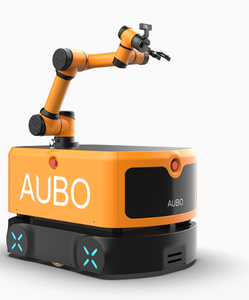
300kg
Payload capacity engineered for dynamic logistics & palletizing
±0.03mm
Repeatability precision for automotive tier-1 assembly
6h+
Continuous shift cycle with smart autonomous recharging
100%
JIS B 8433 & ISO 10218 safety architecture compliant
Engineering Precision
Nagoya Standard Automated Hardware Catalog
Deploy high-performance autonomous navigation platforms, heavy payload handling, and high-degree-of-freedom robotic systems verified for industrial environments.
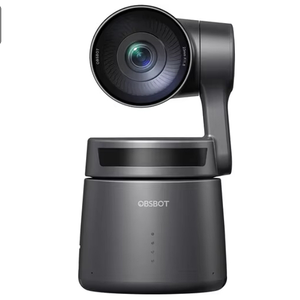
OBSBOT Tail Air NDI 4K AI Tracking Wireless Webcam 10x Optical USB Interface Microphone PTZ Streaming Gesture Control Streaming

Flip Card Slot and Stand Wallet Magnetic Phone Case for Sony Xperia XZ1 XZ3 XZS XA1 XZ Premium XA2 Ultra Pro-i Ace L3 L4 Ace II
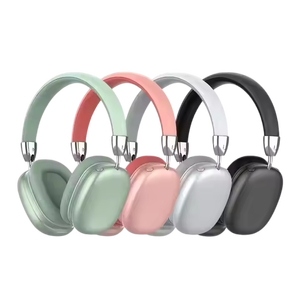
High Quality P9 Pro Max Wireless Headphones With Mic Stereo Sound Sport Waterproof Headset Telescopic Earbuds Type-c Over-ear
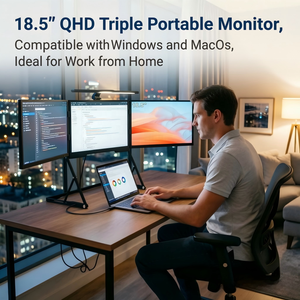
Large Size Portable 18.5 Inch Triple Monitor QHD 2560*1440 IPS Screen with Foldable Aluminum Stand for Laptop Business Using
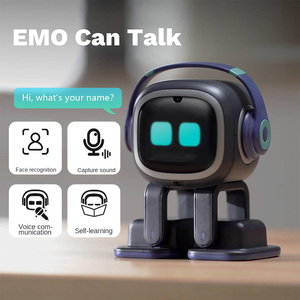
Special Gift EMO Smart Desk AI Robot Pet ChatGPT Wide-angle Camera Voice Control Dance Interactive Party Partner AI Emotion
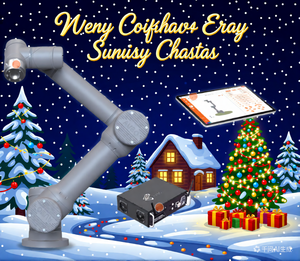
ONA AUBO-C5 Cobot with Payload 5kg and Arm Reach 886mm
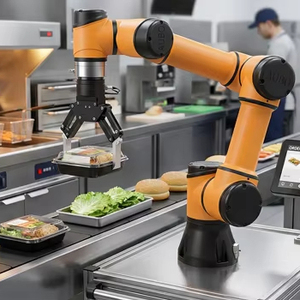
Original AUBO i3 6 Axis Collaborative Robot 3kg Payload 625mm Reach 0.03mm High Precision Cobot for Assembly and Packaging
E-E-A-T Technical Paper
Nagoya Robotics Ecosystem: Autonomous Implementation Whitepaper
Aichi Prefecture accounts for Japan’s most concentrated industrial output. Learn why robotics procurement in Nagoya differs from standard global procurement frameworks.
Just-In-Time (JIT) Intralogistics & AMR Integration
Within the manufacturing belt extending through Toyota City, Kariya, and Nagoya Harbor, intralogistics must synchronise with kanban cycles down to the second. Deploying autonomous mobile robots like the AUBO AMR300 requires SLAM-based dynamic path calculation, deterministic floor traversal, and sub-millimeter dock alignment to feed automated guided lines without buffer inventory overflow.
Precision Assembly for Powertrain & EV Subsystems
The ongoing transition across Greater Chubu toward next-generation battery modules, inverter assembly, and transmission components mandates collaborative robotics that operate reliably inside tight work envelopes. With 6-axis kinematics and repeat accuracies up to 0.03mm (such as the AUBO i3 and C5 series), robotics suppliers must integrate sensitive torque sensors to guarantee compliance during press-fitting and wire harnesses routing.
AI Vision Systems & Low-Latency Tracking
Quality assurance verification across Nagoya’s tier suppliers has transitioned from static point sensors to high-frame-rate intelligent visual recognition. Combining 4K AI optical tracking with multi-axis edge processors allows automated visual defect assessment, optical bin picking verification, and remote live diagnostics via NDI streaming protocols without adding physical footprint to production cells.
Regional Analysis
Nagoya Market Localization & Automation Trends
How shifting demographic realities, energy conservation regulations, and system interoperability drive robotics supply decisions in Central Japan.
Mitigating the Skilled Machinist Shortage (2025–2030)
The Chubu Economic Federation has identified skilled artisan retirement as an operational bottleneck. Autonomous systems with intuitive lead-through programming, graphical drag-and-drop teach pendants, and AI gesture control allow machine shops across Aichi, Gifu, and Mie to automate deburring, screw-driving, and packaging without requiring dedicated on-site roboticists.
Green Transformation (GX) & Energy Efficiency Standards
Automakers in the Nagoya region adhere strictly to Scopes 1, 2, and 3 decarbonization metrics. Replacing high-draw pneumatic actuators with high-efficiency 48V DC battery systems and low-power DC servomotors reduces plant energy draw significantly. Our lithium-powered AMRs maintain high work-to-recharge ratios, contributing directly to green factory certifications.
Hybrid Cloud Fleet Monitoring & Modbus/CC-Link Compatibility
Nagoya's automated infrastructure relies heavily on CC-Link IE Field, Modbus-TCP, and OPC-UA communication backbones. Modern robotics architectures must interface directly with existing programmable logic controllers (PLCs), allowing plant engineers to monitor real-time telemetry, battery health, and payload distribution without modifying factory networks.
Manufacturer Competence
Why Industrial Buyers Partner With Us
Leveraging multi-axis kinematics, advanced sensor fusion, and established global distribution networks to support Nagoya’s industrial leaders.
Real Hardware Kinematics
From 22-degree-of-freedom companion platforms to 6-axis industrial-grade cobots, our systems feature robust harmonic drive gearing and durable brushless servo motors engineered for continuous duty.
Sensory Perception & AI Cloud
Combining Time-of-Flight (ToF) distance arrays, SLAM cameras, tactile touch sensors, and multi-microphone sound arrays to empower robots that map spaces, recognize human intent, and adapt safely.
Global Service & Local Verification
Our cross-border engineering support team provides verifiable technical specifications, localized variant configuration, and reliable replacement modules to keep production lines moving.
Procurement Directives
Nagoya Market Buyer FAQ: Autonomous Robotics
Detailed answers regarding safety verification, floor flatness tolerances, and integration lifecycle management in Aichi factories.
Q: What floor surface requirements exist for high-speed AMR deployment in older Nagoya factories?
Our industrial AMRs, such as the AUBO AMR300, utilize suspension chassis modules that negotiate floor seams and expansion joints up to 10mm width and 5mm height differentials. For high-speed travel at 1.3m/s, we recommend epoxy or polished concrete meeting DIN 18202 flatness tolerances to preserve localization fidelity and wheel polyurethane life.
Q: How do your collaborative cobot arms meet Japanese workplace safety standards (JIS B 8433)?
Both the AUBO i3 and C5 cobots incorporate Category 3, PL d safety architectures compliant with ISO 10218-1 and ISO/TS 15066 (adopted under JIS B 8433). They feature dual-channel monitoring, safety-rated soft axis limitations, and collision-stop sensitivity adjustable down to 0.1 N·m, allowing fenceless operation alongside plant operators upon risk assessment completion.
Q: Can the mobile units interlock with facility elevators, automated roll-up shutters, and fire systems?
Yes. We supply dedicated I/O gateway adapters and MQTT/REST API connectors that integrate with building management systems (BMS). AMRs can autonomously call factory elevators, request shutter lifts via dry contacts or Wi-Fi broadcasts, and immediately transition to emergency fail-safe zones upon receiving factory fire alarm interlocks.
Q: How is battery replacement and charging handled in multi-shift manufacturing cycles?
Equipped with 52Ah high-density lithium iron phosphate (LiFePO4) or ternary lithium packs, our autonomous vehicles achieve 6+ continuous operating hours under rated load. With contact-plate opportunity docking, battery levels charge from 20% to 80% within 45 minutes during operator shift changes and meal breaks, enabling continuous round-the-clock facility operation.
Optimize Your Automation Line in Nagoya Today
Direct communication with specialized robotics deployment engineers. Request technical drawings, payload analysis, regional electrical compliance documentation, or on-site proof-of-concept evaluations.