Precision Robotic Platforms & Intelligent Peripherals
Verified hardware configurations engineered for smart companion robotics, collaborative industrial workflows, and high-efficiency communication systems.
Sony Aibo Battery Architecture: Powering Dynamic Kinematic Demands
A comprehensive examination of lithium chemistry, cell impedance, and SMBus cryptographic telemetries across ERS-1000 and legacy Aibo platforms.
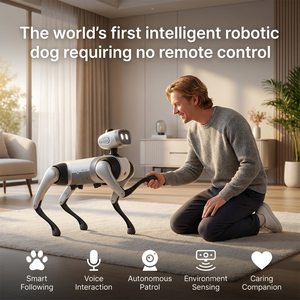
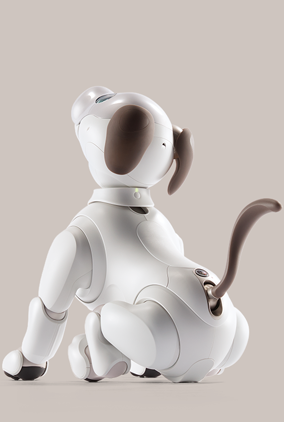
The Sony Aibo series—most notably the modern flagship ERS-1000 autonomous canine alongside revered vintage generations such as the ERS-7, ERS-210, and ERS-311—represents one of the most electrochemically demanding applications in modern consumer quadruped robotics. Unlike static appliances or wheeled robotic vacuums that maintain stable, linear discharge profiles, an autonomous companion robotic dog experiences instantaneous current spikes. The simultaneous actuation of 22 independent degrees of freedom (actuators), real-time spatial SLAM processing, wide-angle dual cameras, time-of-flight (ToF) sensors, dynamic organic light-emitting diode (OLED) display eyes, and cloud Wi-Fi transmission imposes erratic dynamic load cycles upon the internal power pack.
Electrochemical Profile: Chemistry Transition from 18650 to Pouch Cells
Legacy Aibo models (such as the ERA-201B1 for ERS-210 and ERA-7B1/7B2 for ERS-7) traditionally deployed dual or quadruple cylindrical 18650 lithium-cobalt-oxide (LiCoO2) or early nickel-manganese-cobalt (NMC) configurations wired in a 2S1P or 2S2P topology. Modern OEM packs and advanced Seoul aftermarket engineering have pivoted toward high-rate INR 18650 / 21700 or customized ultra-slim lithium-polymer (LiPo) pouch cells offering continuous discharge capabilities of 5C to 10C.
In modern rebuilds designed for commercial entertainment robot centers and domestic environments, thermal stability is paramount. The operational envelope within the compact abdominal cavity of the robot restricts passive convective cooling. Consequently, cell factories operating in the Seoul-Gyeonggi industrial corridor implement specialized ceramic-coated separators and high-purity electrolyte additives to suppress internal heat generation during autonomous docking and constant two-hour duty cycles.
SMBus Protocol Handshake
Precision fuel gauging via Texas Instruments BQ-series micro-controllers communicating over I2C/SMBus, ensuring accurate state-of-charge (SoC) telemetry prevents unprompted shutdowns.
Active Multi-Tier BMS Protection
Dual hardware and firmware over-voltage, under-voltage, over-current, and multi-sensor NTC thermal cut-offs protecting 22 sensitive servo motors from line voltage anomalies.
Precision Cell Matching
Automated grading processes grouping cells with delta internal resistance (ΔIR) < 2mΩ and delta capacity < 15mAh, stopping premature series-imbalance cell drift.
Localized Applications in Seoul & the South Korean Market
From Gangnam robotic companion cafes to municipal silver-care wellness initiatives, how South Korea’s hyper-dense IoT infrastructure relies on continuous robotic uptime.
Seoul represents one of the world's most sophisticated testing grounds for autonomous companion robotics and intelligent edge devices. Across the Seoul Capital Area (SCA)—encompassing Incheon and Gyeonggi-do—the deployment of AI pet robots extends far beyond enthusiast novelty into systematic, institutional, and consumer frameworks:
Smart Silver Welfare Centers
Under Seoul Metropolitan Government’s municipal welfare projects (such as initiatives in Nowon-gu and Gangnam-gu), companion robots combat senior isolation. Reliable 2S/3S battery packs are essential to ensure 10-12 continuous hours of interactive engagement without midday power failure.
Robotics Theme Cafes & Showrooms
In districts like Hongdae, Seongsu-dong, and Teheran-ro, robotic animal cafes showcase Sony Aibo units to the public. High-duty cycle fast-charging batteries prevent thermal throttling when robots cycle through docking stations 8 to 12 times daily.
Academic AI & SLAM Research Labs
Institutions including Seoul National University (SNU) and KAIST deploy ERS-1000 and quadrupeds for open-R SDK kinematic study. Custom high-capacity battery units allow uninterrupted machine-learning inference over dense 5G Wi-Fi networks.
Localization Technical Trends in South Korea
The South Korean battery industry is heavily influenced by the presence of global battery titans (Samsung SDI, LG Energy Solution, and SK On). This has catalyzed a regional supply chain specializing in secondary battery pack assembly, micro-BMS calibration, and strict safety testing protocols. Key engineering shifts observed among Seoul-based pack designers include:
- Nickel-Rich NMC Chemistry Integration: Transitioning to high-energy NMC 811 cells to increase battery runtimes from roughly 110 minutes to upwards of 160 minutes within the identical physical ERS-1000 battery cavity dimensions.
- Direct SMBus Emulation for Restrictive Firmware: Implementing custom flashed firmware that mimics Sony’s OEM handshakes, preventing bricking errors and flashing error codes during Sony cloud OTA synchronization.
- KC 62133-2 Safety Compliance: Rigorous localized stress testing for portable electronic secondary cells, enforcing crush, thermal shock, and vibration standards crucial for export qualification across Northeast Asia.
Top 10 Sony Aibo Battery Factories & Exporters in Seoul
A rigorously evaluated index of industrial battery pack assemblers, custom BMS developers, and specialized robotics component exporters located across the Seoul Metropolitan Area.
1. Seoul EnerTech Solutions Ltd.
Rank 01Located within Geumcheon-gu’s prominent IT cluster, Seoul EnerTech specializes in precision laser-welded cylindrical battery packs using Grade-A Samsung SDI cells. They provide turnkey replacement assemblies for legacy Aibo ERA-7B1 packs and custom 7.4V lithium-polymer replacement modules engineered with internal thermal fuses and exact mechanical housing dimensions.
2. Hanlan Micro-Power Robotics Corp.
Rank 02Hanlan Micro-Power is recognized for its micro-electronic control engineering. They design drop-in replacement PCB assemblies equipped with specialized fuel gauge chips calibrated to Sony ERS-1000 current draw algorithms, eliminating the persistent "sudden battery shutdown" common in substandard generic imports.
3. Pangyo Precision Cell Systems
Rank 03Operating just south of Seoul in Pangyo Techno Valley, this exporter operates an ISO 17025-certified testing facility providing complete cycle lifecycle reports, UN38.3 transport certifications, and specialized high-density lithium polymer replacements for robotics repair centers worldwide.
4. NeoK-Power Export Industrial
Rank 04Positioned near Gimpo International Airport, NeoK-Power handles dangerous goods (DG) Class 9 battery logistics seamlessly. They maintain steady inventory of lithium battery packs for companion robots, serving institutional buyers, veterinary robotics programs, and overseas refurbishing hubs.
5. Daehan Robotics Power Pack Co.
Rank 05Daehan Robotics focuses on injection-molded battery casings and precision spot-welding for rare and discontinued robotics hardware. Their production line excels at legacy Sony Aibo ERS-210 (ERA-201B1) recelling services using modern high-capacity 3500mAh 18650 cells.
6. K-Battery Lab Tech
Rank 06A high-end engineering consultancy that expanded into batch production, K-Battery Lab focuses on reverse-engineering obsolete proprietary battery telemetry protocols. They provide global buyers with SMBus-compliant drop-in lithium packs with 100% telemetry fidelity.
7. Songpa Dynamics Battery Works
Rank 07Renowned for their automated ultrasonic pouch cell sealing lines, Songpa Dynamics manufactures ultra-flat 7.4V lithium packs that maximize space efficiency within quadruped belly compartments, boasting an impressive volumetric energy density exceeding 520 Wh/L.
8. Cybertronics Korea Exporters
Rank 08Cybertronics is an international trading powerhouse specializing in robotics maintenance components. They manage a robust distribution network spanning North America, Japan, and Western Europe, guaranteeing KC, CE, and UL certified battery packs.
9. Incheon Core Battery Solutions
Rank 09Situated on the industrial western corridor of Seoul, Incheon Core delivers automated nickel-strip micro-welding with high thermal dissipation margins. Their packs undergo 100% post-assembly impedance testing under load conditions that match Aibo leg servo surges.
10. Teheran Robotics Energy Systems
Rank 10Leveraging deep software engineering roots in Seoul’s Silicon Valley, this producer supplies smart battery modules featuring onboard Bluetooth telemetry for diagnostic technicians to audit cell degradation without disassembling the robot chassis.
Comparative Battery Architecture Specifications
Direct technical side-by-side performance indicators comparing legacy OEM specifications with Seoul precision export models.
| Evaluation Parameter | OEM Stock (ERS-1000) | Seoul High-Drain Upgrade | Legacy Pack (ERA-7B1 Recell) |
|---|---|---|---|
| Nominal Cell Voltage | 7.2V (2S Configuration) | 7.4V (High-Density 2S) | 7.2V - 7.4V (2S2P Design) |
| Rated Rated Capacity | 2600 mAh - 2800 mAh | 3350 mAh - 3500 mAh | 4400 mAh - 5200 mAh |
| Continuous Discharge Rating | 2C (5.2A Continuous) | 5C (15A Max Peak Surge) | 3C (Continuous Drain) |
| BMS Communication Protocol | Proprietary Sony SMBus | Emulated SMBus + Crypto Handshake | Standard HDQ / SMBus v1.1 |
| Operational Temperature Margin | 0°C to 40°C | -10°C to 55°C (Ceramic Barrier) | 0°C to 45°C |
| Safety & Compliance Standards | PSE, UL, CE | KC 62133-2, UN38.3, RoHS | UN38.3, CE |
| Cycle Life (to 80% DoD) | ~500 Full Cycles | >800 Full Cycles | ~600 Full Cycles |
| Commercial Deployment Tier | Standard Domestic | High-Hour Showrooms | Collector Refurbish |
Shenzhen Aiborobo Technology Co., Ltd. Global Advantage
As a global pioneer in AI companion robotics distribution, technical integration, and maintenance support, Shenzhen Aiborobo Technology Co., Ltd. bridges the gap between precision high-rate battery factories and international robotics operators.
We deliver deep domain expertise across every facet of the aibo ERS-1000 platform—from its 22 axes of movement, OLED optical systems, and multi-sensor perception arrays to the underlying power requirements that guarantee stable autonomous performance.
Frequently Asked Questions: Seoul Aibo Battery Procurement
Essential guidance addressing regulatory certifications, shipping logistics, BMS handshakes, and cell longevity for commercial procurement officers.