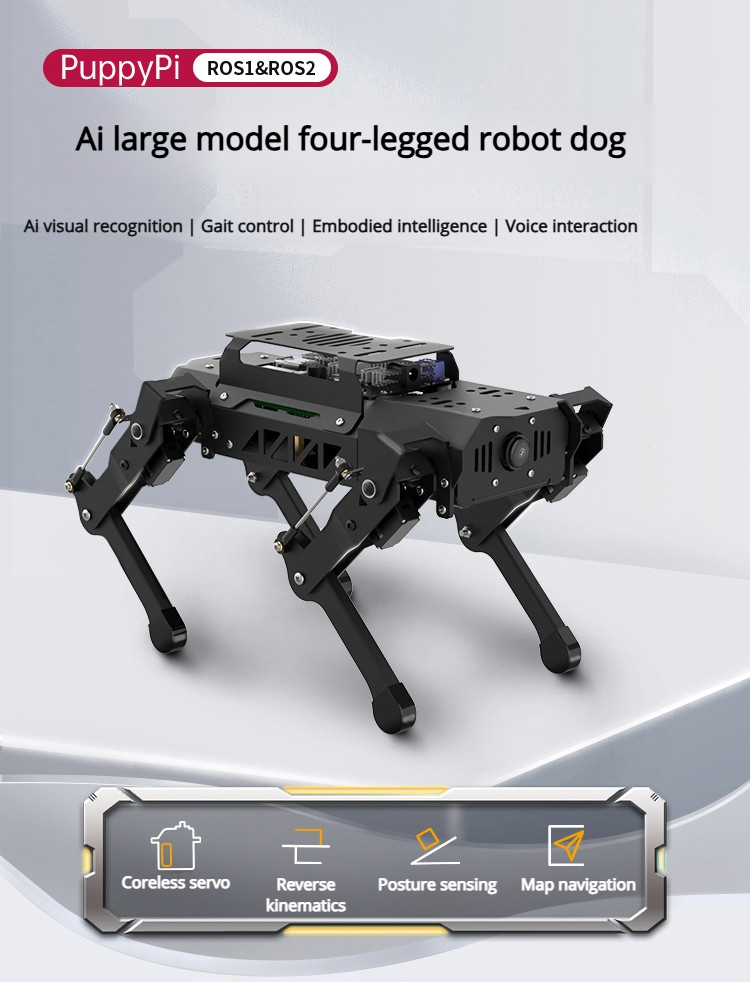
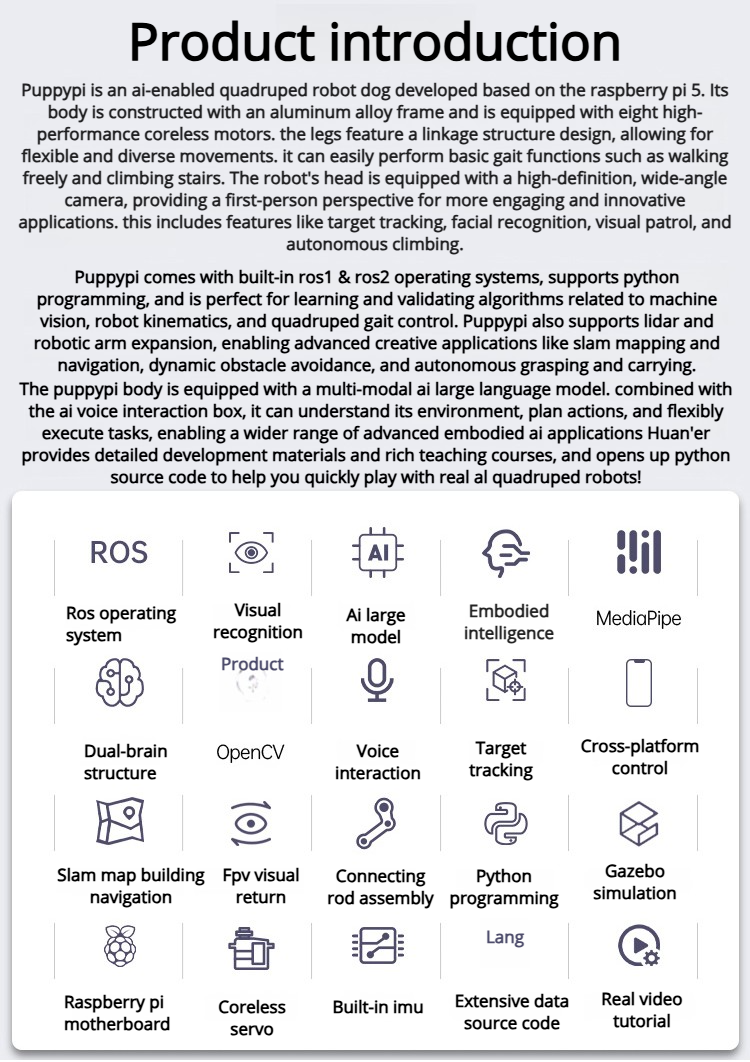
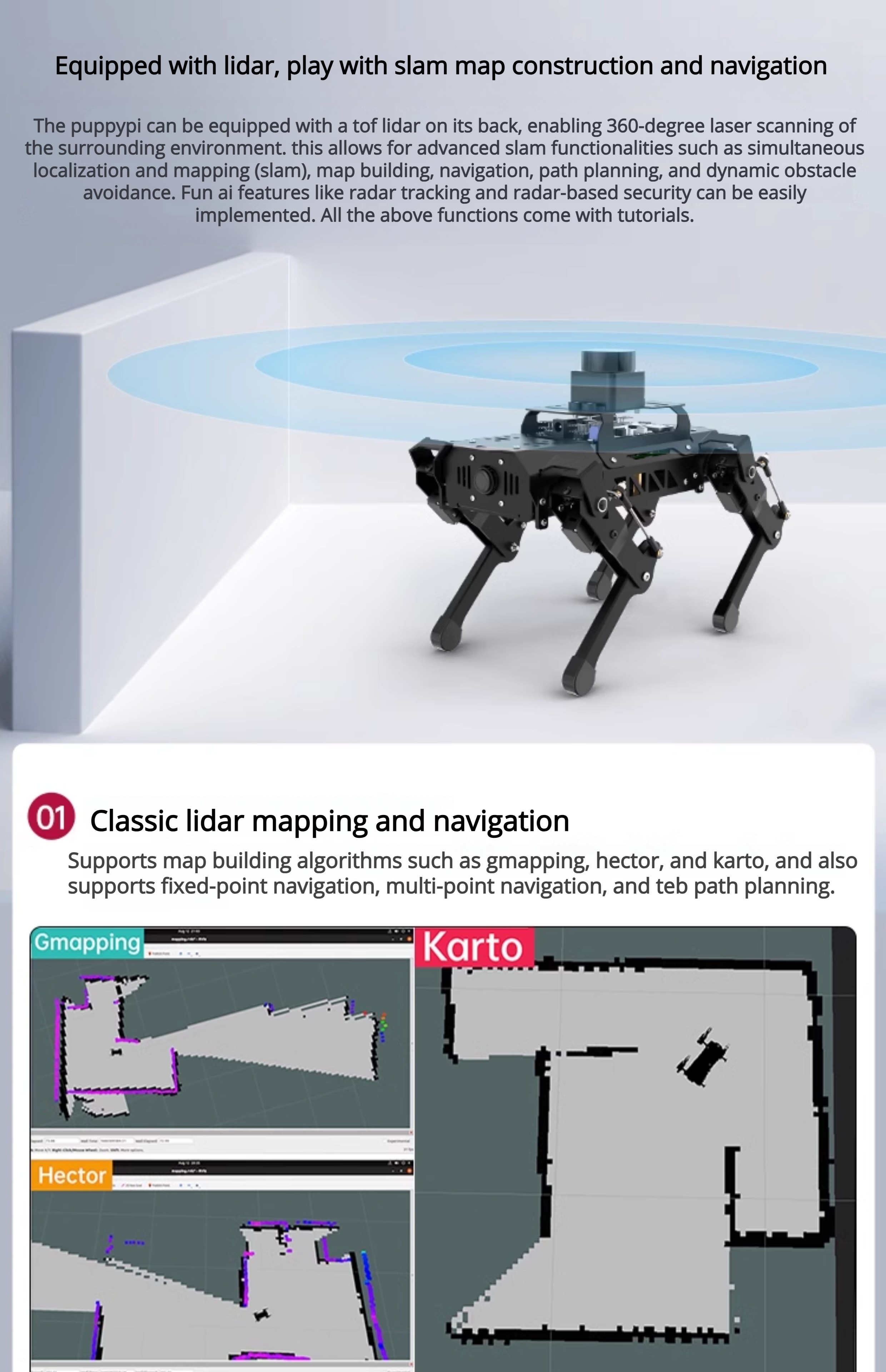
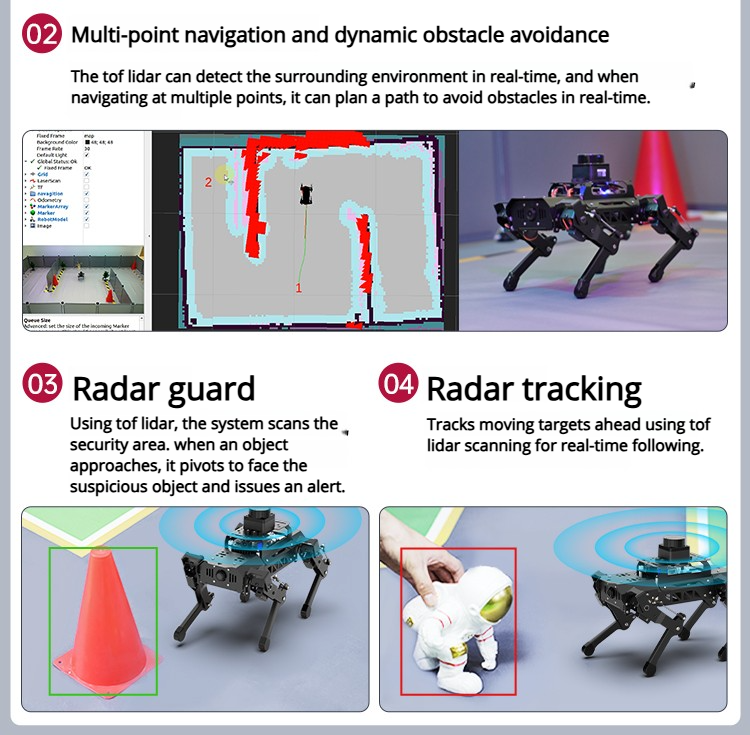
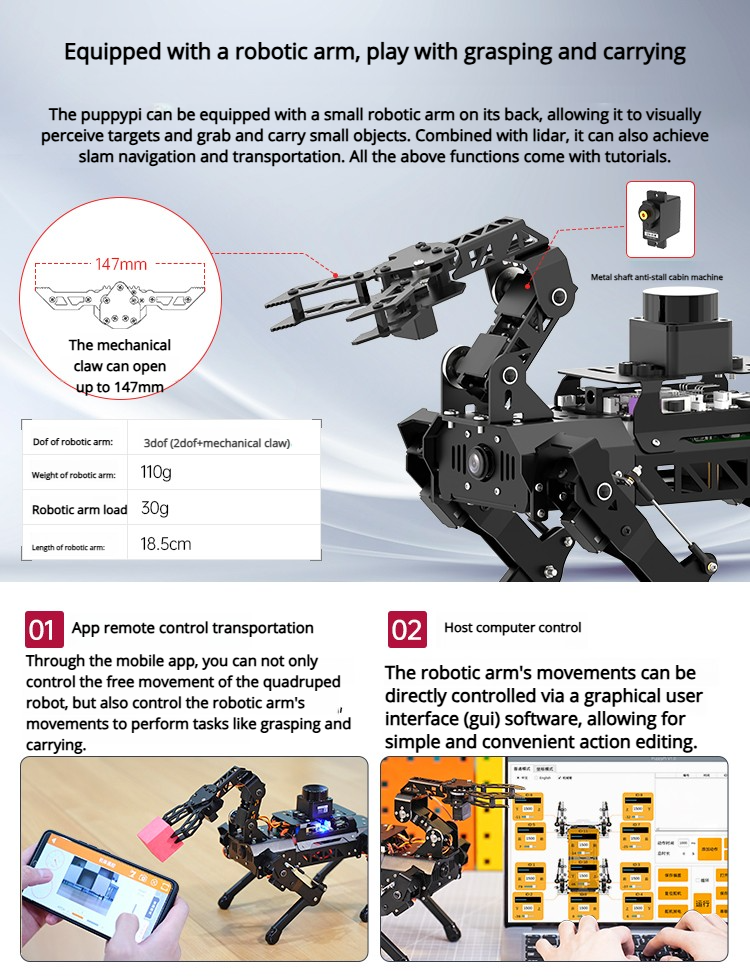
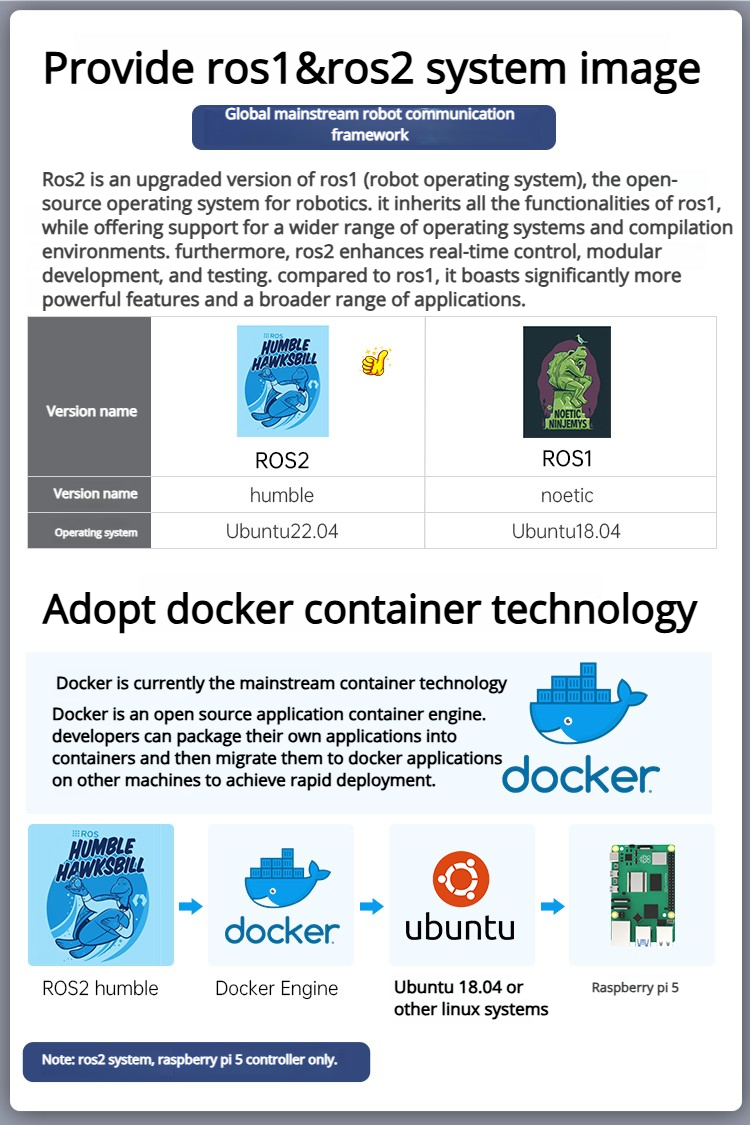
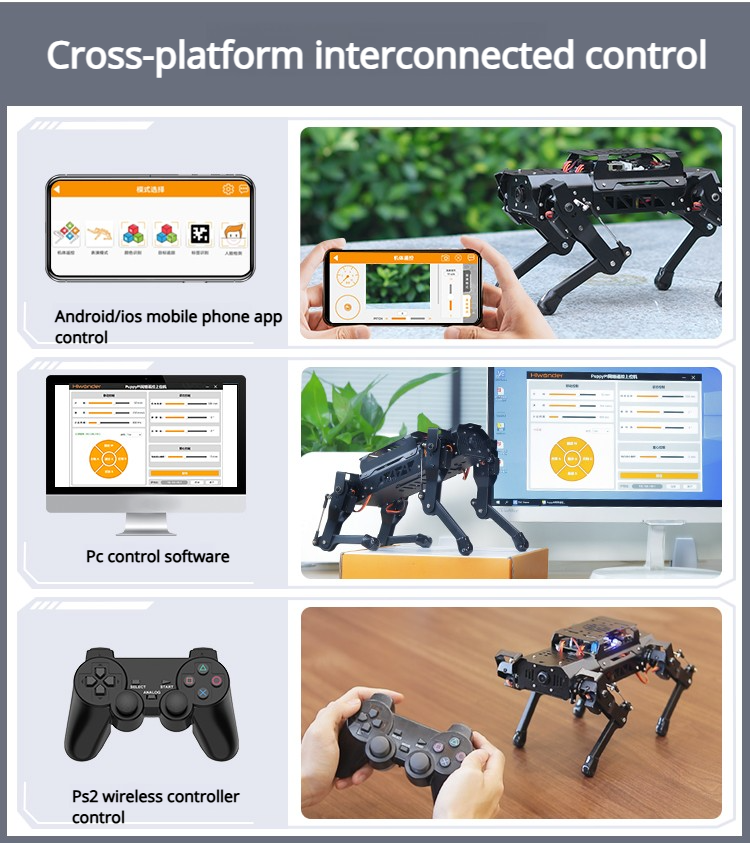
It utilizes the Robot Operating System (ROS) as its core framework. This provides a modular and flexible software architecture, enabling advanced robotic functions like SLAM, navigation, and easy integration of various sensors and algorithms.
Dynamic Bionic Locomotion
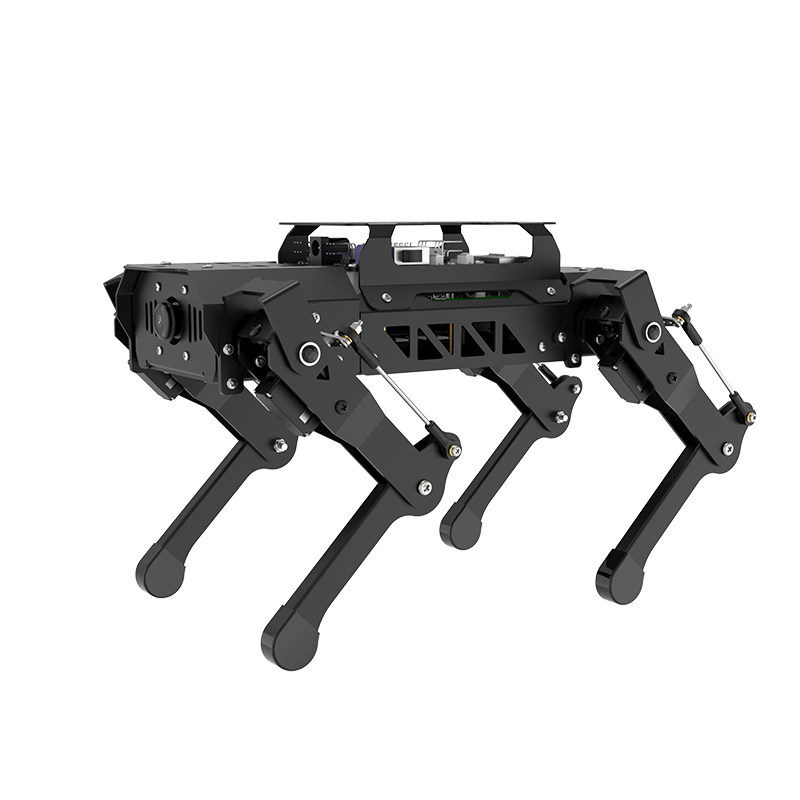
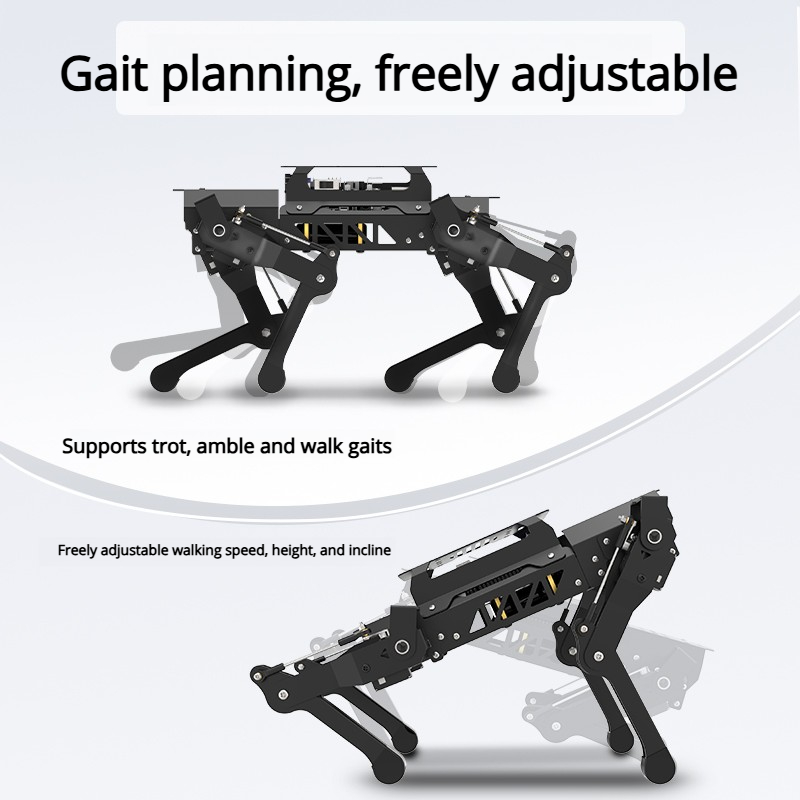
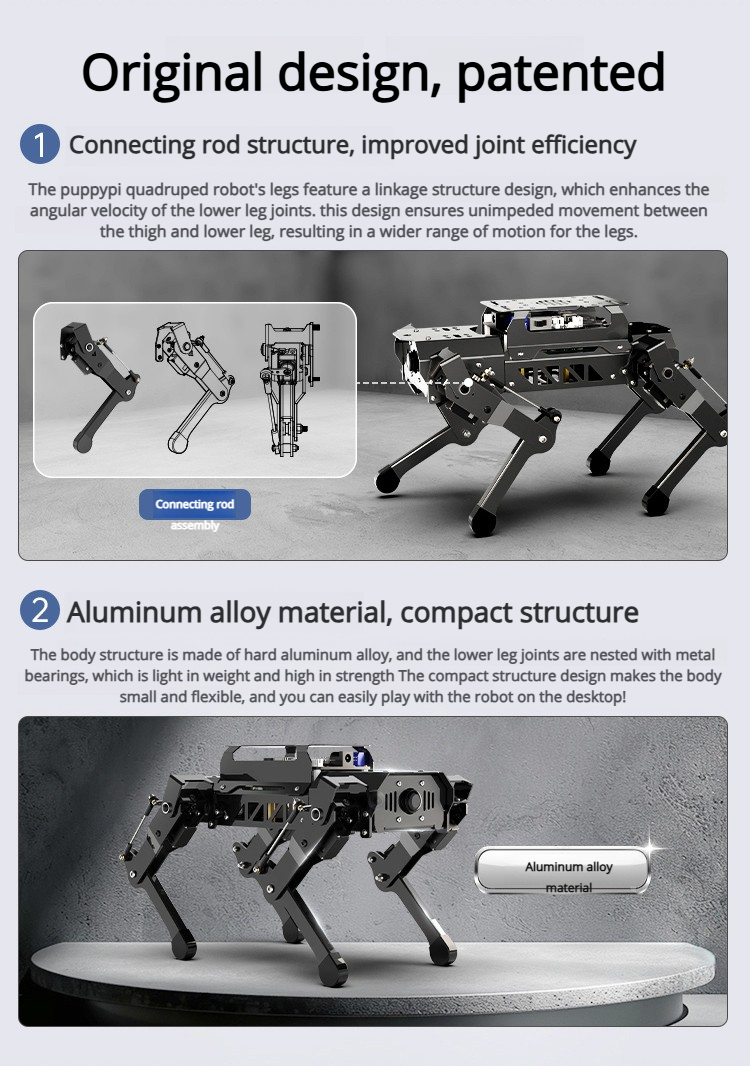
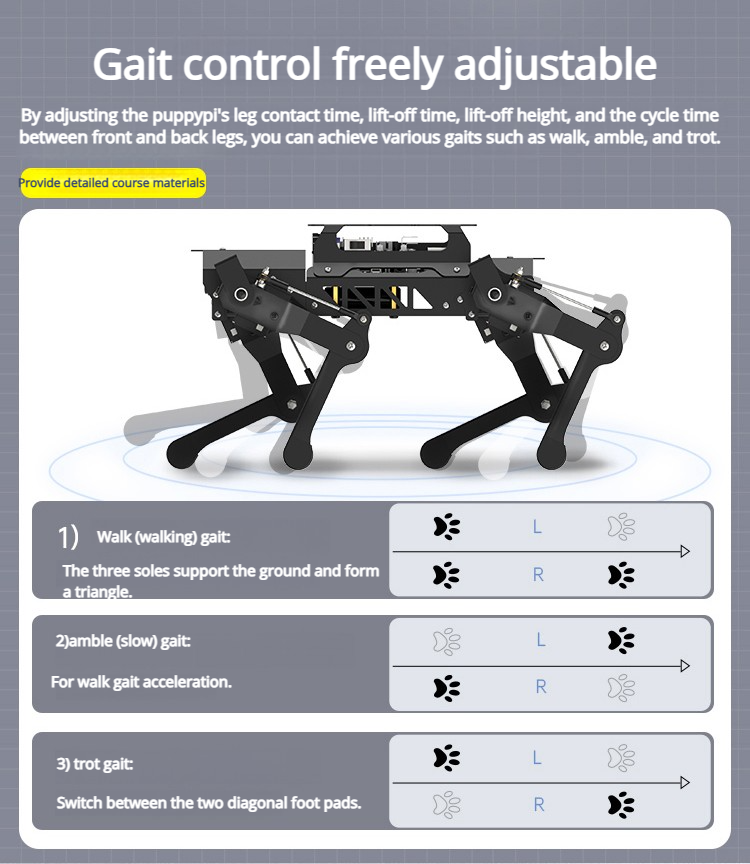
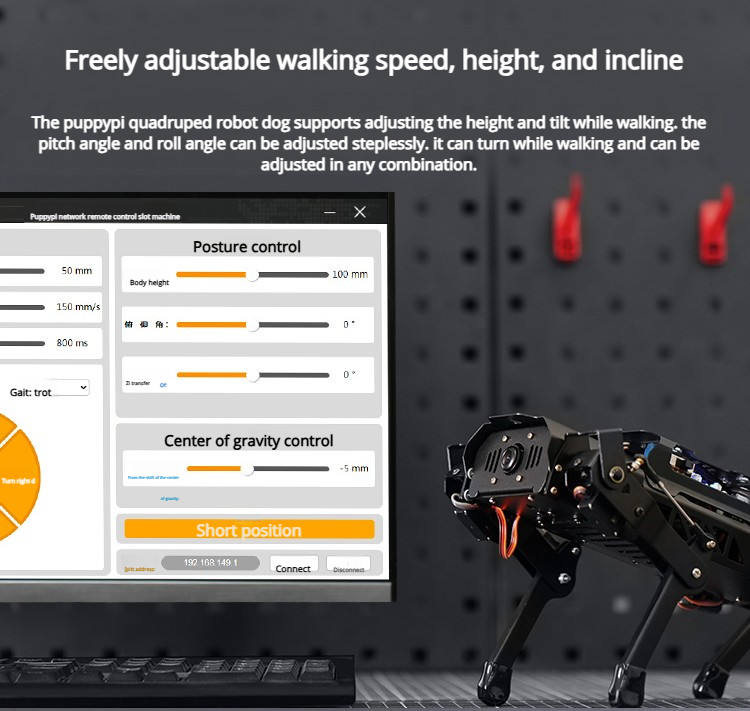
As a quadruped (four-legged) bionic robot, it is capable of stable and dynamic walking, trotting, turning, and potentially navigating uneven terrain, mimicking the movement of a real animal.
AI Visual Recognition & Interaction
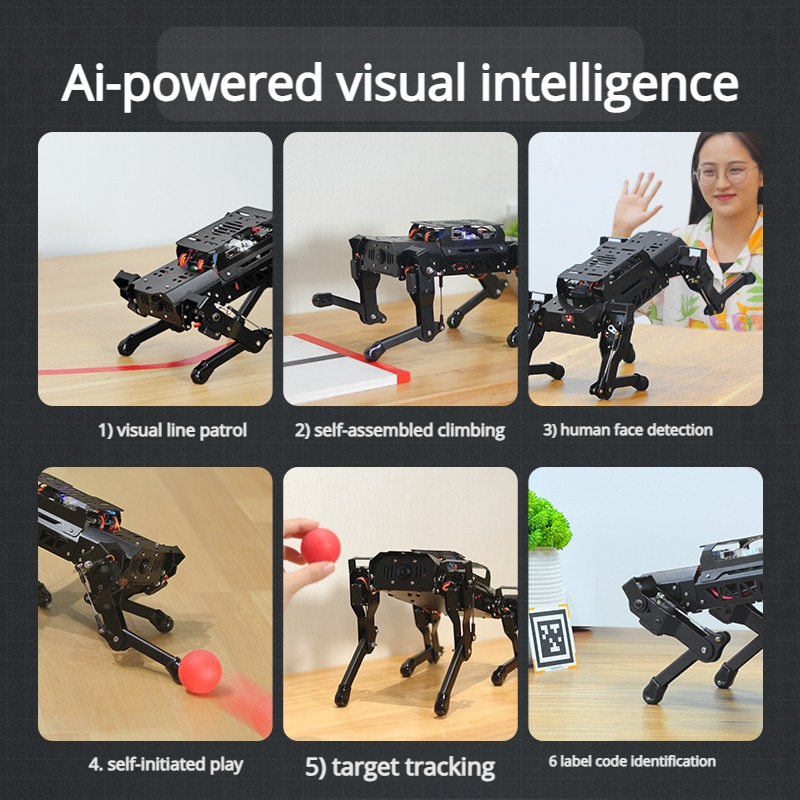
Equipped with a camera and powered by AI algorithms (likely running on the Raspberry Pi 4B), it can perform real-time visual tasks such as object recognition, face detection, tracking, and human-robot interaction.
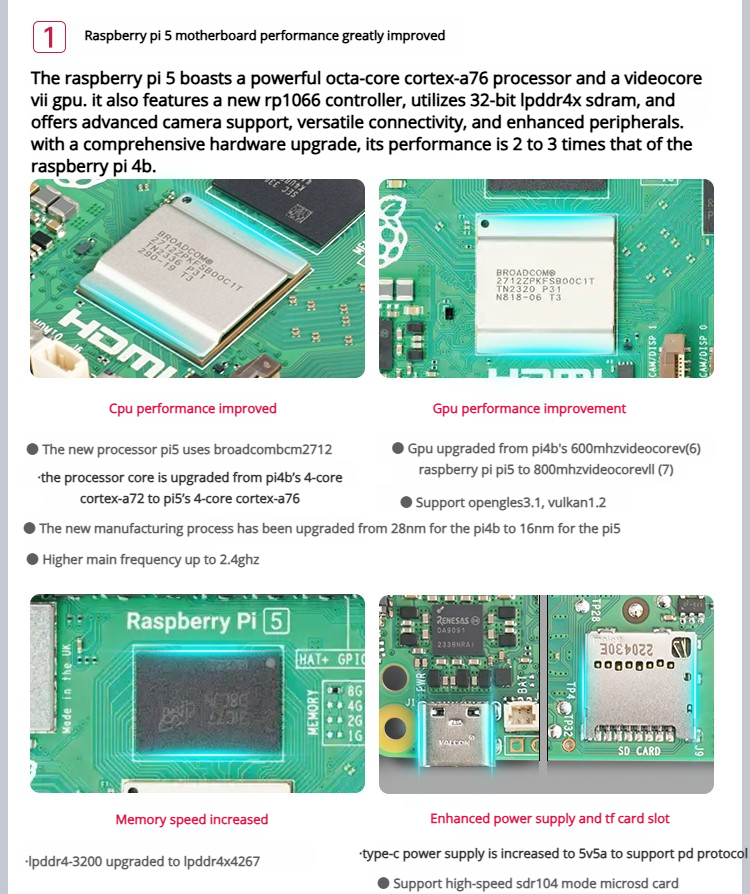
Raspberry Pi 4B Computing Hub
The Raspberry Pi 4B serves as the main onboard computer. It handles sensor data processing, AI inference, high-level control logic, and network communication, offering a versatile and accessible development platform.
Intelligent Programming & Education Platform
Designed for learning and experimentation in robotics, AI, and programming. Users can program its behaviors, modify gaits, develop new AI vision applications, and understand quadruped mechanics through hands-on coding, making it ideal for education and research.
Detailed Images
Frequently Asked Questions
What operating system does this robot dog utilize?
The robot operates on the Robot Operating System (ROS) framework, offering modular architecture, support for SLAM and autonomous navigation, and seamless algorithm expansion.
What locomotion patterns can the bionic robot perform?
As a quadruped bionic system, it is designed for stable and dynamic movements such as walking, trotting, turning, and traversing challenging or uneven terrain.
What AI vision tasks are supported?
With an integrated camera and onboard AI processing, it supports visual tasks including object identification, face detection, target tracking, and interactive human-robot experiences.
What role does the Raspberry Pi 4B play in the robot?
The Raspberry Pi 4B acts as the primary computing hub, executing AI inference models, sensor data acquisition, gait planning, and network communication.
Is this platform suitable for educational and research use?
Yes, it is purposefully engineered for universities, researchers, and makers to practice coding, study quadruped kinematics, and develop custom AI vision algorithms.
Can users write custom gait planning and control algorithms?
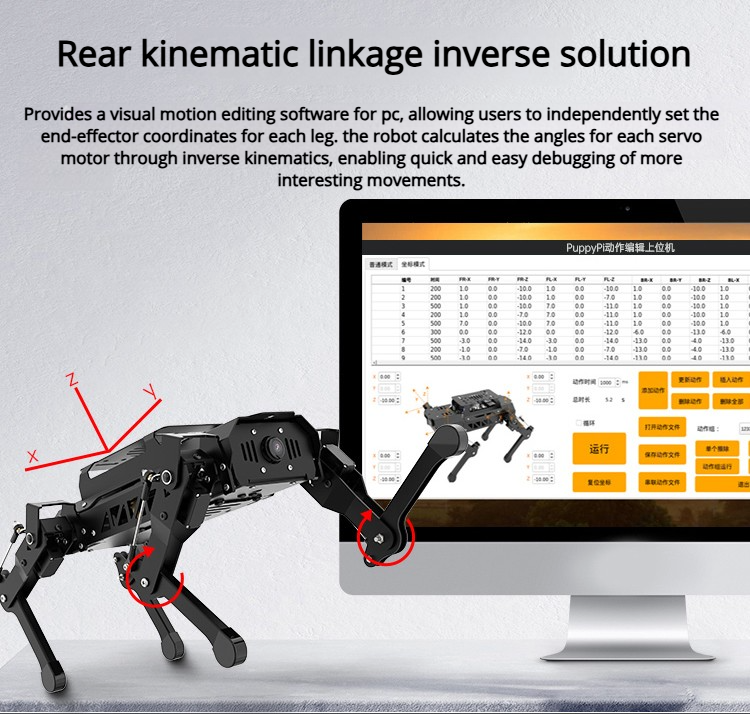
Yes, the open architecture allows developers to modify gait kinematics, customize behaviors, and deploy custom ROS packages.